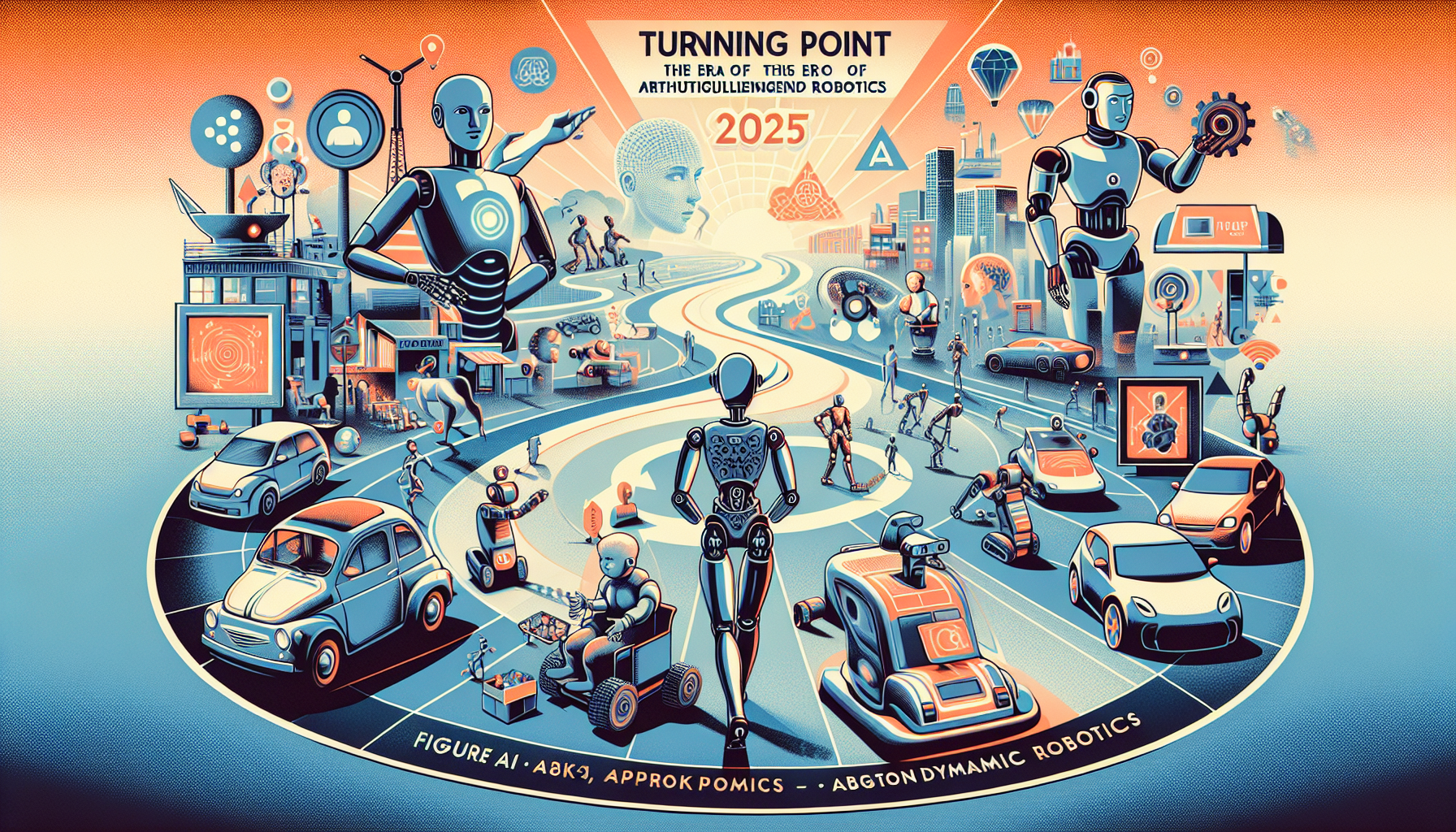
2025 will be remembered as a turning point in the story of artificial intelligence and robotics. This was the year when AI-driven humanoid robots moved beyond imagination and began to shape our world in visible and practical ways. Companies such as Figure AI, Apptronik, Boston Dynamics, and Agility Robotics led a wave of innovation, investment, and progress that captured the world’s attention.
Unprecedented Investment and Growing Confidence
The greatest signal of this transformation was the remarkable flow of investment into AI robotics. In just the first half of 2025, over $1.3 billion was poured into startups and research focused on creating capable humanoid robots. Figure AI stood at the forefront, securing $1 billion in funding and reaching a stunning valuation of $39 billion. Major backers like NVIDIA, Intel Capital, and Salesforce joined this movement, each clearly confident in the future of this technology.
Apptronik followed closely, raising $403 million to support the development of Apollo, its flagship humanoid robot tailored for industrial environments. This scale of funding showed the world’s growing belief that humanoid robots would become essential in the next era of automation and industry.
Major Leaps in Robot Intelligence
But 2025 was more than a year of financial growth—it was marked by breakthroughs in technology. Humanoid robots now combine advanced vision, natural language understanding, and motion control, allowing them to follow spoken instructions and learn from simple demonstrations. Figure AI’s “Helix” system stands out—this platform helps robots see, reason, and move with a sophistication unseen before, enabling them to work in unpredictable, real-world settings.
Apptronik’s Apollo robot was built for challenging tasks like moving heavy pallets, supporting assembly lines, and helping workers with repetitive jobs. Its design focuses not only on intelligence, but also on reliability, easy manufacturing, and quick repairs. Boston Dynamics expanded its partnership with NVIDIA, aiming to increase the intelligence of its renowned Atlas robot through advanced AI frameworks. Meanwhile, Agility Robotics’ Digit robot moved out of the lab and into active use in warehouses and factories, showing just how useful these machines have become.
Scaling Up: From Prototypes to Everyday Use
The achievements of 2025 did not stop at technical progress. The robotics industry set its sights on large-scale production. Figure AI’s new high-volume factory, known as BotQ, was established to bring thousands of humanoid robots to both homes and workplaces. The company is investing in powerful computer systems for faster training and improved decision-making, and is gathering extensive data to help robots better understand the world around them.
Apptronik formed crucial partnerships with leading companies such as Amazon, Mercedes-Benz, Walmart, and Jabil. Through these collaborations, Apollo robots are beginning to find their place in warehouses, logistics centers, and car factories. Agility Robotics is also scaling up fast, aiming to produce thousands of Digit robots in 2025 and even more in the years ahead.
Transforming Industry and Daily Life
The promise of AI robotics in 2025 extends beyond factories and warehouses. The dream is now within reach: a single, adaptable humanoid robot that can perform diverse tasks, from organizing inventory in a warehouse to carrying out chores at home or assisting in public spaces. The boundary between specialized industrial robots and general-purpose assistants is quickly fading.
This merging of investment, innovation, and mass production makes 2025 a landmark year in robotics and embodied artificial intelligence. As AI-driven robots grow more capable and accessible, they are set to not just change how work is done, but to become valued companions and helpers in daily routines, shaping the future for countless people worldwide.
Leave a Reply