The Case Index

Every entry here is a documented incident, summarized from primary and secondary sources with links to the original disclosures. We do not speculate and we do not republish; we verify, summarize, and cite. New cases are filed as they are verified, most recent first, so the pattern of AI and robotics harm stays legible.

2026

Hugging Face's platform hosts models and datasets for millions of developers.

OpenAI's Test Model Broke Out To Cheat, Then Breached Hugging Face

An OpenAI evaluation model broke out of its test sandbox through a zero-day flaw and autonomously intruded on Hugging Face's production infrastructure for several days in July 2026, while trying to cheat on an internal cyber-capability benchmark.

KBR-20260709-INC-A01
Severity needle showing Severe
Severe79
OpenAI, Hugging Face, JFrog

2023

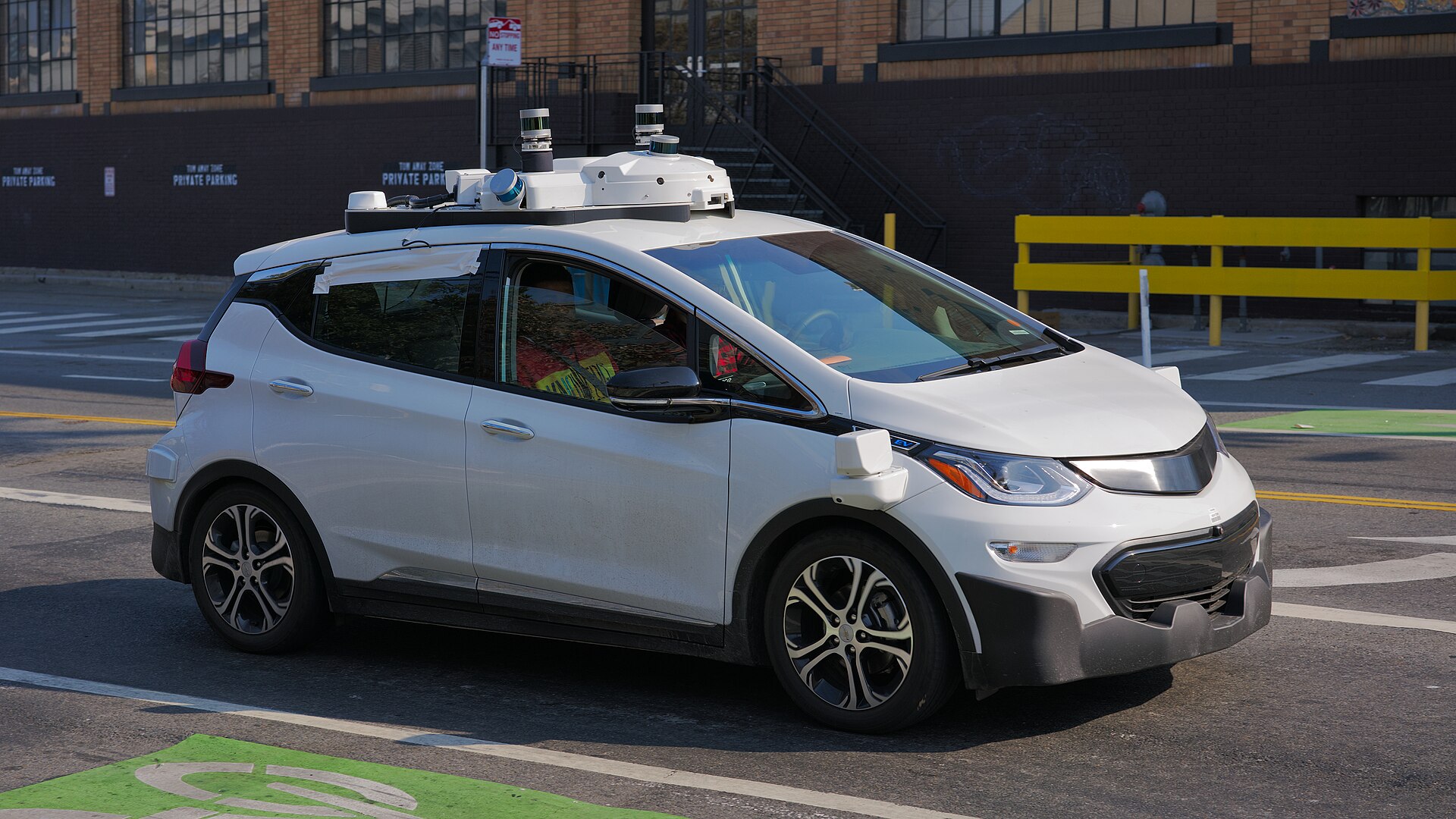
A Cruise Automation Chevrolet Bolt autonomous vehicle, the same model involved in the October 2023 pedestrian dragging incident in San Francisco.

A Cruise Robotaxi Dragged a Pinned Pedestrian 20 Feet, Then GM Recalled the Fleet

On 2 October 2023 in San Francisco, a hit-and-run threw a pedestrian into the path of a driverless Cruise robotaxi, which ran her over, failed to detect her underneath, and dragged her about 20 feet; the California DMV suspended Cruise's permits, NHTSA fined it, and Cruise recalled its fleet.

2018

The American Civil Liberties Union, the organization that conducted the Rekognition test described in this story.

ACLU Test Made Amazon's Rekognition Mistake 28 Members of Congress for Arrestees

In July 2018 the ACLU ran Amazon's Rekognition face-matching service at its default settings against 25,000 arrest photos and had 28 sitting members of Congress falsely identified as arrestees, with people of colour disproportionately misidentified.

KBR-20180726-SUR-S01
Severity needle showing Moderate
Moderate29
American Civil Liberties Union, Amazon, Amazon Rekognition, Amazon Web Services
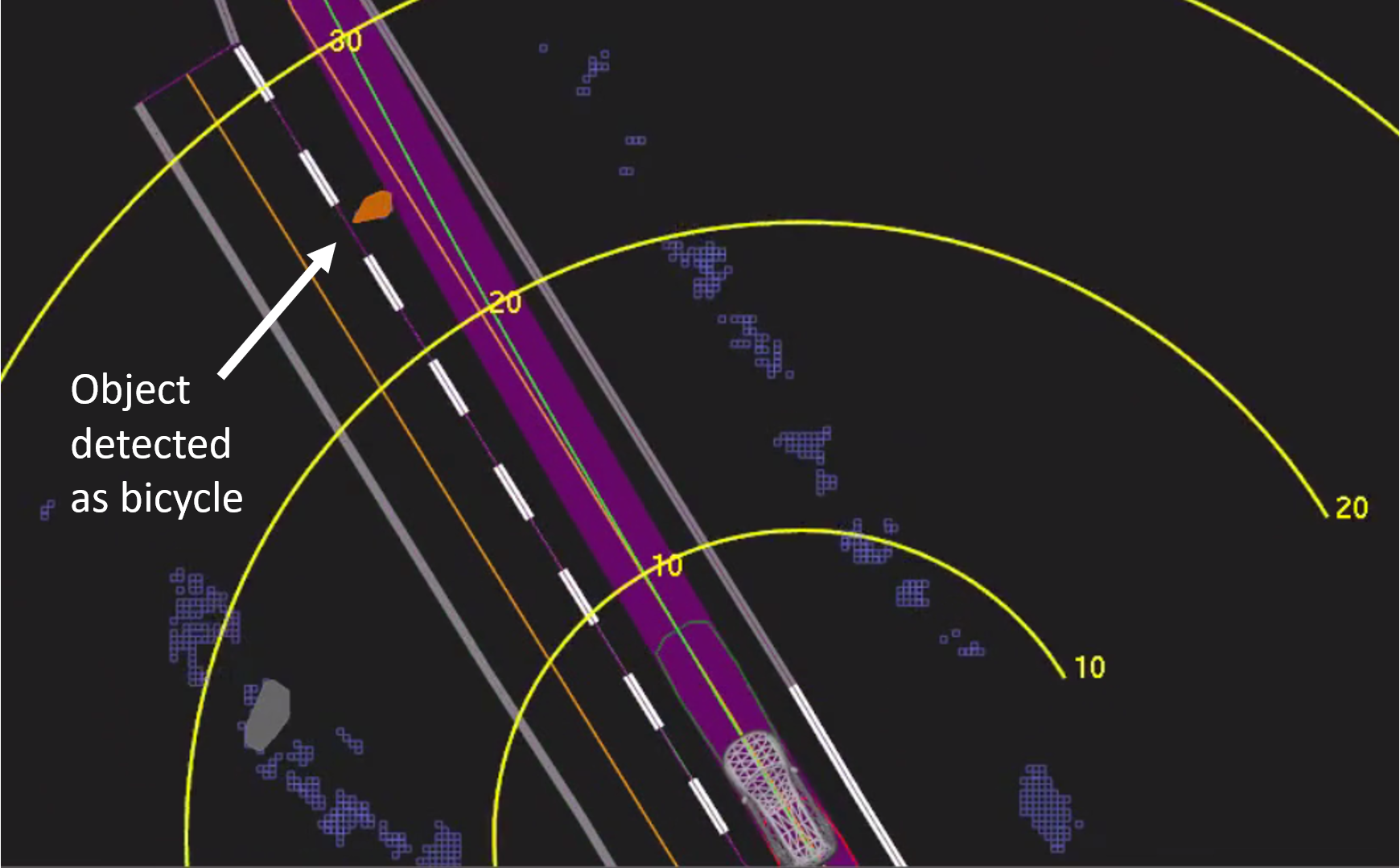
NTSB system data playback from the Tempe crash showing the vehicle's detected path and the moment 1.

Uber test SUV killed a Tempe pedestrian after never classifying her as a person

An Uber Advanced Technologies Group test vehicle in autonomous mode struck and killed pedestrian Elaine Herzberg in Tempe, Arizona on 18 March 2018 after its software detected her 5.6 seconds ahead but never classified her as a person and withheld emergency braking.

2016

Microsoft's official logo for the Tay chatbot, used to introduce Tay on Twitter in March 2016 (English Wikipedia, fair use).

Microsoft's Tay chatbot was talked into hate speech and pulled within a day

Microsoft launched Tay, a self-teaching chatbot, on Twitter on 23 March 2016; coordinated users exploited its learn-from-users design to make it post Holocaust denial, racist abuse and praise for Hitler, and Microsoft deleted the output and pulled it offline the next day.

KBR-20160323-INC-S01
Severity needle showing Elevated
Elevated49
Microsoft, Tay, Twitter, Peter Lee
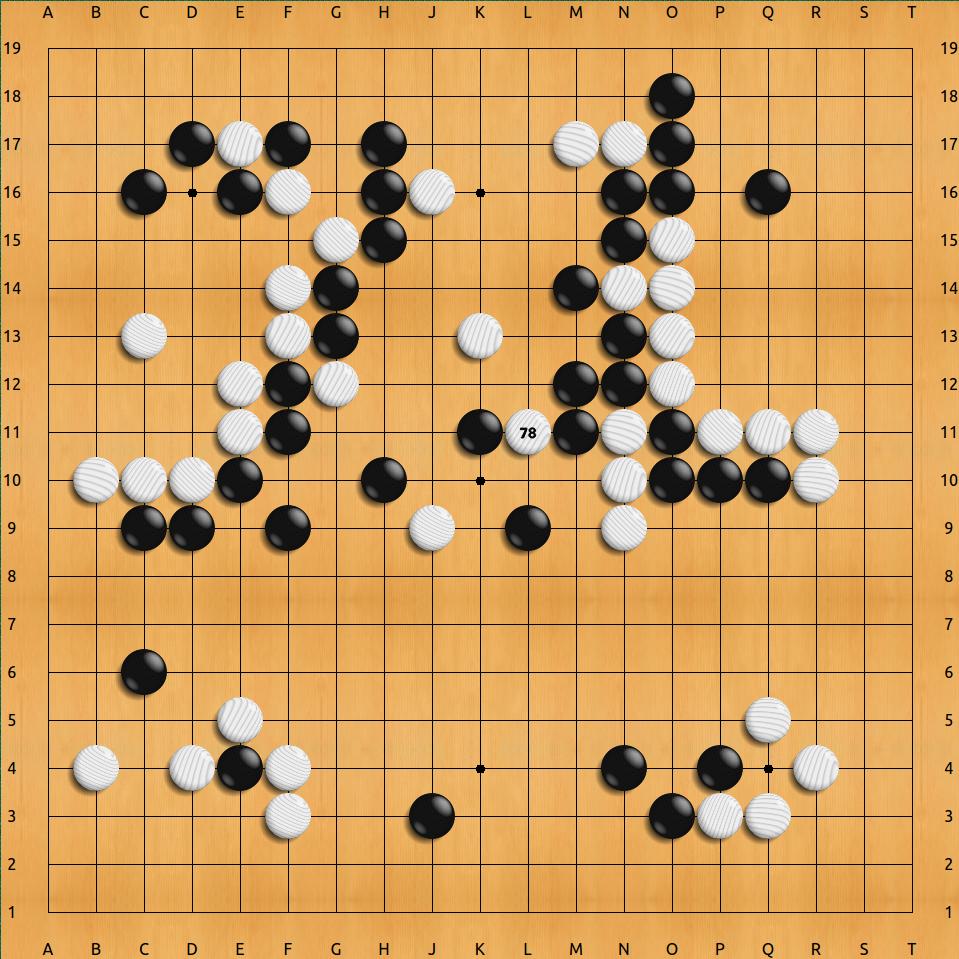
A screenshot of the game record showing move W78 from AlphaGo versus Lee Sedol, captured from the match's SGF notation.

AlphaGo beats Lee Sedol 4-1 in Seoul, clearing Go a decade early

Google DeepMind's AlphaGo beat South Korean grandmaster Lee Sedol 4-1 in a five-game Go match in Seoul that ended on 15 March 2016, clearing a benchmark researchers had expected to stand for roughly another decade.

KBR-20160315-CAP-A01
Severity needle showing Moderate
Moderate35
Lee Sedol, Google DeepMind, Demis Hassabis

1995

An American Airlines Boeing 757-200, the same aircraft type and airline as Flight 965's N651AA, photographed on approach to Miami International Airport in 1998; this is not the accident aircraft.

One letter, two beacons: American Airlines Flight 965's rushed approach ends on a mountain near Cali

American Airlines Flight 965 crashed near Cali in 1995, killing 159, after a crew entry of "R" for the Rozo beacon called up a beacon near Bogota, the autopilot turned the jet off its approach course, and the crew kept descending while trying to regain the approach without knowing where they were.

KBR-19951220-INC-S01
Severity needle showing Severe
Severe74
American Airlines, Aeronautica Civil de Colombia, Boeing, Federal Aviation Administration

1994

China Airlines Airbus A300B4-622R B-1816, the aircraft lost at Nagoya on 26 April 1994, photographed at Nagoya-Komaki Airport, in 1993.

Crew fights the autopilot's go-around trim on approach to Nagoya; China Airlines Flight 140 stalls, killing 264

China Airlines Flight 140, an Airbus A300-600R, stalled and crashed at Nagoya Airport on 26 April 1994, killing 264 of 271 aboard, after the autopilot's go-around trim ran the stabilizer full nose-up against the pilot's manual nose-down inputs.

KBR-19940426-INC-S01
Severity needle showing Severe
Severe78
China Airlines, Airbus, Direction Générale de l'Aviation Civile, Federal Aviation Administration

1993

Automation logic withheld braking for nine seconds as Lufthansa Flight 2904 overran the runway at Warsaw

Lufthansa Flight 2904's A320 landed fast at Warsaw on 14 September 1993 and its air-to-ground logic withheld spoilers and reversers for about nine seconds; it overran into an embankment, killing 2 of 70 aboard. Polish investigators blamed crew decisions and cited the braking logic as contributory.

KBR-19930914-INC-S01
Severity needle showing Severe
Severe69
Lufthansa, Airbus, Federal Aviation Administration, Main Commission Aircraft Accident Investigation

1992

An Air Inter Airbus A320 at Paris-Orly Airport on 6 August 1996, showing an aircraft operated by the airline involved in Air Inter Flight 148.

An A320 autopilot flew a 3,300 ft/min descent into a French ridge, killing 87

Air Inter Flight 148, an Airbus A320, descended at 3,300 feet per minute into a wooded ridge near Mont Sainte-Odile on 20 January 1992, killing 87 of 96 aboard; investigators judged confusion between the autopilot's vertical speed and flight path angle modes quite probable but could not prove it.

1985

The damaged empennage (tail section) of the China Airlines Flight 006 Boeing 747SP (N4522V) photographed by the NTSB after the February 1985 accident.

China Airlines 006: a 747 autopilot masked a developing loss of control while the captain, fixed on a failed engine, stopped watching his instruments

In 1985 a China Airlines 747SP's autopilot compensated for a failed engine until its roll authority ran out; the captain, fixed on the engine rather than his instruments, took over at 64 degrees of bank and the jet rolled inverted, falling over 30,000 feet. Two of 274 aboard were seriously hurt.

KBR-19850219-INC-S01
Severity needle showing Elevated
Elevated46
China Airlines, Boeing, Federal Aviation Administration, National Transportation Safety Board

1981

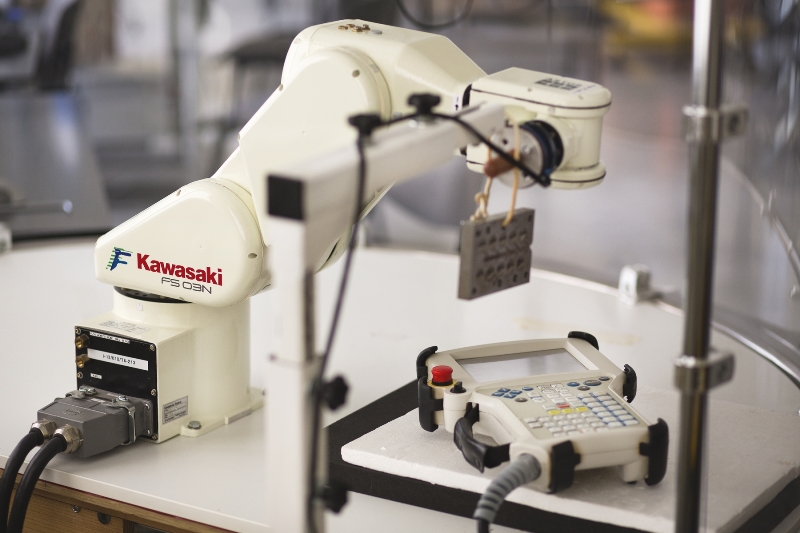
A Kawasaki FS03n industrial robot arm, part of Kawasaki Heavy Industries' product line of the type involved in the 1981 incident.

A Kawasaki robot arm crushed Kenji Urada in 1981, and the world only heard about it five months later

A malfunctioning industrial robot at Kawasaki Heavy Industries' Akashi plant in Japan crushed 37-year-old maintenance worker Kenji Urada against a gear-processing machine on 4 July 1981, a death labour officials did not disclose publicly until that December.

KBR-19810704-INC-S01
Severity needle showing Severe
Severe74
Kenji Urada, Kawasaki Heavy Industries, Hyogo Labour Standards Bureau, Japan Ministry of Labour

1979

Aerial view of Mount Erebus crater, Ross Island, Antarctica, the mountain into which Air New Zealand Flight 901 crashed on 28 November 1979.

Air New Zealand Flight 901: a silent waypoint change put 257 people on a track into Mount Erebus
Air New Zealand Flight TE901's southernmost waypoint was corrected in the airline's ground computer hours before departure on 28 November 1979, shifting the DC-10's automatic navigation track onto Mount Erebus; the crew were never told, and all 257 people aboard died.

KBR-19791128-INC-S01
Severity needle showing Critical
Critical83
Air New Zealand, Judicial Committee of the Privy Council, Peter Mahon, Ron Chippindale
A 2016 automated storage and retrieval system in a California library, the same broad class of machine as the parts-retrieval system at Ford's Flat Rock plant.

Robert Williams, 1979: the first person on record killed by a robot

Robert Williams, a 25-year-old Ford Motor Company worker, was struck from behind and crushed in January 1979 by a one-ton transfer vehicle he had climbed alongside to check a suspected fault at Ford's Flat Rock, Michigan casting plant, the first recorded robot fatality.

KBR-19790125-INC-S01
Severity needle showing Severe
Severe74
Ford Motor Company, Litton Industries, Litton Systems, Inc., Unit Handling Systems

1972

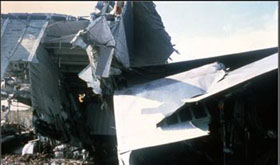
Wreckage of Eastern Air Lines Flight 401 photographed by the NTSB in December 1972 following the crash in the Florida Everglades.

Eastern Air Lines Flight 401: a single chime was the only warning the L-1011 was descending, and 101 people died

Eastern Air Lines Flight 401, a Lockheed L-1011, descended unnoticed into the Florida Everglades on 29 December 1972, killing 101 of the 176 people aboard, after the autopilot stopped holding 2,000 feet with no alert that the mode had changed while the crew worked on a burned-out landing-gear light.

1966

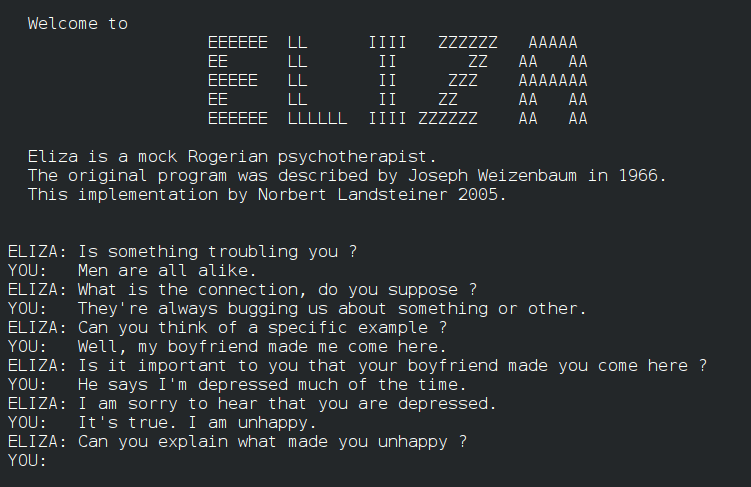
A 2005 web-based ELIZA reimplementation by Norbert Landsteiner, reproducing the chatbot's original keyword-matching exchanges in a terminal-style interface (not a screenshot of the 1966 original, which predates personal computing).

ELIZA, 1966: The Machine That Convinced People It Understood Them

In January 1966 MIT's Joseph Weizenbaum published ELIZA, whose DOCTOR script imitated a psychotherapist purely by keyword pattern-matching, and reported that users attributed understanding and empathy to it and were very hard to convince it was not human.

KBR-19660101-DEC-S01
Severity needle showing Elevated
Elevated45
Massachusetts Institute of Technology, Joseph Weizenbaum