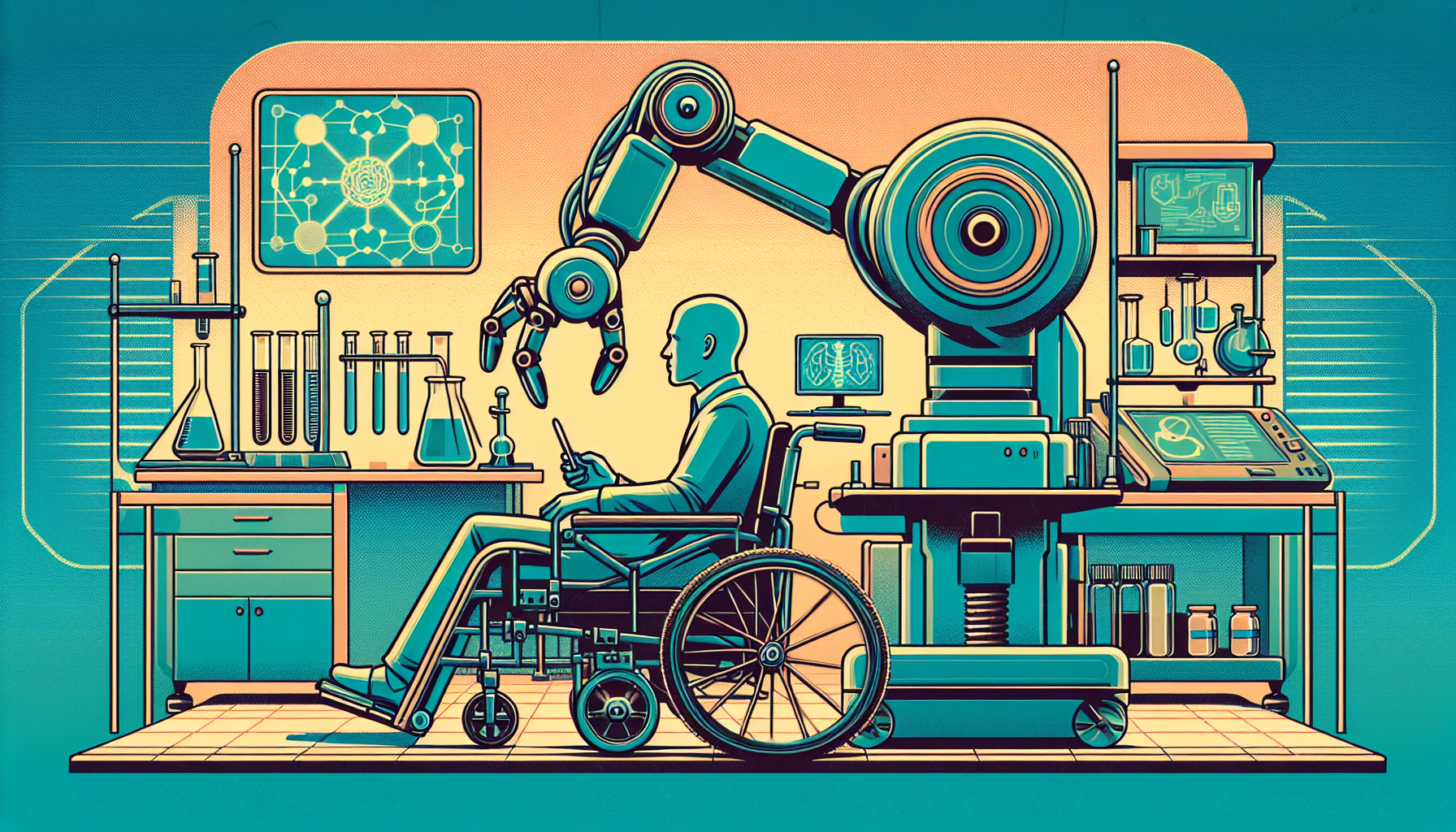
Northeastern University’s Robotics and Intelligent Vehicles Research Laboratory (RIVeR Lab), in partnership with the Advanced Research Projects Agency for Health (ARPA-H), is developing a groundbreaking autonomous wheelchair. This isn’t just a new kind of wheelchair—it’s equipped with advanced artificial intelligence and a dexterous robotic arm, all created to bring practical daily independence to people with severe mobility challenges, including those living with quadriplegia.
A Vision for Independence
For decades, power wheelchairs have changed little. Most still rely on heavy batteries and closed software systems, limiting what users can do. Northeastern’s project, called the Robotic Assistive Mobility and Manipulation Platform Providing Independence for People with Disabilities (RAMMP), marks a different path. Instead of being just a means of transport, this chair is designed to serve as a genuine partner in daily life, able to help with feeding, opening doors, managing medication, and even shopping for groceries.
Innovative Features
- Dexterous Robot Arm: Made by Kinova Robotics, the arm is lightweight and precise. It can grasp objects, open doors, and even help with eating. Designed for gentle, safe interaction, it gives users the ability to perform tasks that would otherwise require help from another person.
- Autonomous Navigation: LUCI Mobility contributes advanced cameras and sensors. The wheelchair’s onboard AI can “see” and understand its surroundings, allowing it to travel safely both indoors and outdoors—without the need for constant manual control.
- Collaborative Spirit: This project brings together minds from Northeastern, University of Pittsburgh, Carnegie Mellon University, Cornell University, and Purdue University, along with companies specializing in robotics and mobility. With support of up to $41 million from ARPA-H, it is one of the most ambitious efforts in assistive technology today.
Next Steps and Future Impact
A working prototype is expected to be finished within a year of late 2025. Once perfected, the technology is set for commercial release within five years, aiming to reach users everywhere. During this time, the platform will be open not just to manufacturers but to researchers as well, allowing continued improvement and adaptation through user feedback and new assistive algorithms.
Professor Taskin Padir leads the project at Northeastern. He speaks with hope and determination about what this new wheelchair can do. While some aspects of personal care—like dressing or moving from bed to chair—still require further innovation, Padir and his team believe that today’s AI and robotics can already bring newfound freedom in other vital activities.
Beyond Northeastern: A Shared Movement
The work at Northeastern is part of a bigger movement. Institutions like Carnegie Mellon University are reimagining what wheelchairs can be by adding robotic arms and smart capabilities. Together, these efforts push the boundaries, seeking to replace outdated, restrictive equipment with open, adaptable solutions.
A Promise of Possibility
For millions who live with significant disabilities, everyday actions that many take for granted—eating independently, opening a door, going to the store—can become possible again. Northeastern’s autonomous wheelchair is more than a technical marvel; it is a testament to what can be achieved when vision, expertise, and compassion come together. As the prototypes move closer to reality and commercialization, this technology holds the promise of transforming lives, restoring control, dignity, and personal choice to those who need it most.
Leave a Reply