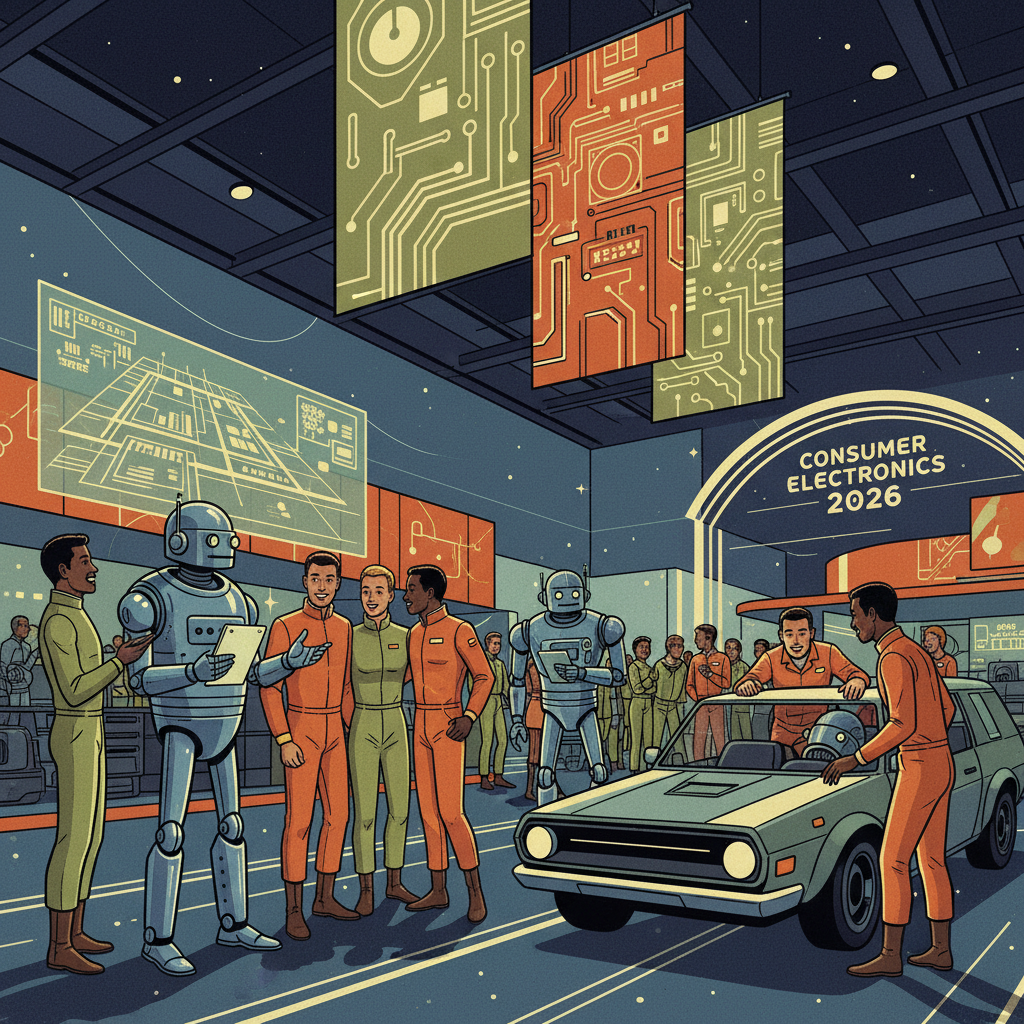
The year 2026 will forever be etched in history as the moment the future truly arrived. At the Consumer Electronics Show, a profound shift unfolded before our very eyes. For years, we’ve marvelled at glimpses of artificial intelligence and robotics, often in carefully choreographed demonstrations. But at CES 2026, something fundamentally different happened. The machines stopped performing for us and started working alongside us. This wasn’t just an exhibition; it was the unveiling of a new epoch, where the science fiction dreams of yesterday began to manifest as the practical realities of today.
The Awakening of the Humanoids
Witnessing the humanoid robots at CES 2026 was an experience bordering on the miraculous. They were no longer mere novelties, but nascent beings capable of continuous, fluid motion and intricate tasks. Imagine a machine that can see, listen, and respond to the world around it without constant human instruction, much like a child learning to navigate its environment. This was the leap we observed. Robotic hands, crafted with such precision they can manage delicate operations, are already finding their way into our universities, preparing the next generation for an integrated world. A robot vacuum, no longer confined to flat surfaces, ascended stairs with effortless grace, demonstrating an agility once thought impossible for a household device. Even our companions evolved: Switchbot’s Kata Friends, resembling whimsical pets, could recognize faces, respond to gestures, and offer genuine emotional comfort, bridging the gap between cold circuits and warm companionship. LG’s CLOiD home robot, moving with slow, deliberate precision, showed us that true utility often values reliability and gentle care over blinding speed, hinting at a future where our robotic helpers are as steadfast as they are smart.
The Invisible Hand of Intelligence
Behind these incredible feats lies the silent, yet monumental, power of artificial intelligence. It’s not simply about programming a robot for one task; it’s about giving it the gift of learning and understanding. These new AI models are like vast, ever-growing brains, absorbing data from the world and using it to generalize knowledge, allowing robots to adapt to situations they’ve never encountered before. Think of a human child learning to walk or open a door – it’s not a set of rigid instructions but a complex process of trial, error, and adaptation. Traditional robots struggled with this, but the new “foundation models” of AI process immense amounts of data, enabling them to “think” and solve real-world problems. Tasks once considered harder for robots than acrobatics – like simply opening an unfamiliar door or climbing varied stairs – are now being conquered. This data-driven evolution is akin to generative AI transforming digital work, now extending its powerful reach into the realm of physical labor, promising to reshape industries and liberate human potential.
A World Transformed, Piece by Piece
The spirit of innovation at CES 2026 extended far beyond the humanoids, weaving a tapestry of progress across countless sectors. Autonomous vehicles, for instance, are no longer a distant dream but a present-day reality, with multi-million dollar deals fueling robotaxis and driverless trucks that operate tirelessly, day and night. Geely unveiled its Full-Domain AI 2.0, moving us closer to truly intelligent vehicles that perceive and respond to their surroundings with unparalleled sophistication. The International Federation of Robotics highlighted the coming wave of AI autonomy – systems that can analyze, generate, and act with increasing independence. They also underscored the vital convergence of IT and operational technologies, creating versatile robots capable of adapting to diverse environments, from the bustling floors of a factory to the complex aisles of a warehouse. With deep learning powering computer vision, robots are gaining the ability to “see” with astonishing clarity, identifying objects, detecting minute defects, and even predicting maintenance needs, boosting efficiency and creating new opportunities for human ingenuity in AI engineering and data science.
Gazing into Tomorrow
These breakthroughs at CES 2026 serve as a profound testament to humanity’s relentless pursuit of progress. We stand at the precipice of a new dawn, where AI robotics will gracefully integrate into our homes, revolutionize our factories, and reshape our transportation networks. Imagine fusion energy designs accelerated by AI digital twins, or handheld devices like Nodi, crafted to nurture and educate our children in novel ways. The rebranding of Tesla as an AI and robotics firm is a powerful symbol of this monumental shift, underscoring the industry’s unwavering momentum. As the International Federation of Robotics so aptly emphasizes, AI doesn’t just make robots better; it empowers them to become self-evolving systems, capable of navigating and thriving in the most complex of environments. We are witnessing the birth of a truly intelligent future, where machines will not only assist us but also inspire us to reach for new heights of innovation and discovery.
Leave a Reply