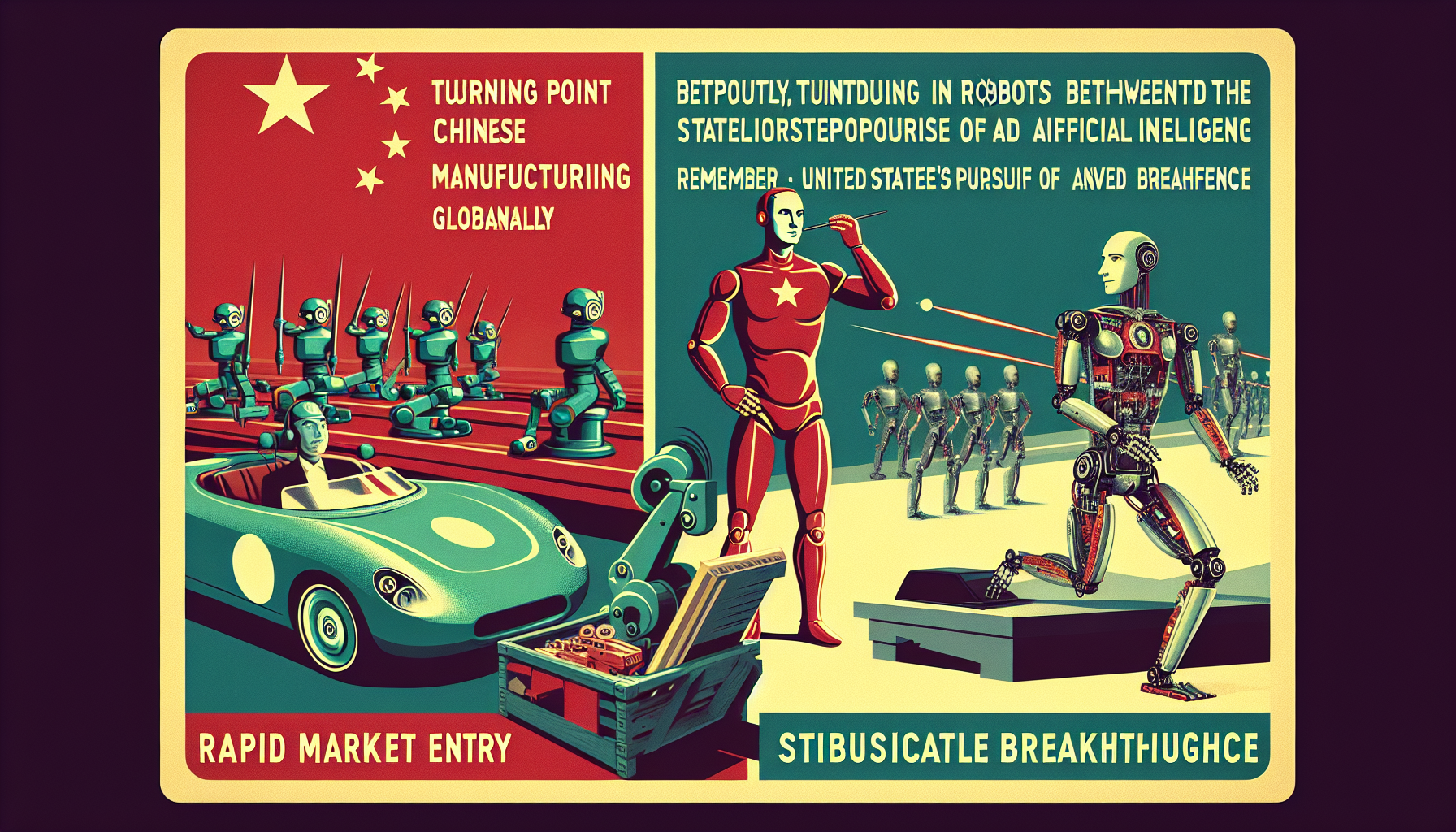
The world is witnessing a turning point in robotics. As Chinese companies race to bring humanoid robots to customers, American firms like Tesla focus on perfecting advanced prototypes. This difference in pace and priorities reveals two distinct philosophies: China values fast manufacturing and market entry, while the United States pursues breakthrough artificial intelligence and lasting capability.
China’s Rapid Progress
Chinese robotics firms are already selling humanoid robots to real customers. At the center is Unitree Robotics, proving that these machines belong in the present, not a distant future. This ability to deliver now gives China a strong advantage over companies still refining prototypes.
Several factors power this rapid progress. The Chinese government provides steady funding and streamlines regulations, reducing wait times and risks. Just as importantly, China’s factories already excel at building complex products, from solar panels to electric vehicles. These skills now accelerate robot production, allowing for a quick leap from development to mass manufacturing—a stage Western companies have yet to reach.
Recent demonstrations, like XPeng’s robot walking with a strikingly lifelike stride, reveal this is more than speed. Chinese engineers are closing the gap in movement and coordination, making robots that not only function but move like humans. This focus on natural movement is essential if robots are to fit smoothly in factories, public spaces, and even homes.
Tesla’s Pursuit of Perfection
Tesla, however, is committed to more than meeting today’s market. Its goal is to achieve unseen levels of skill and intelligence before taking its robot, Optimus, to the public. Rather than rushing to sell first-generation machines, Tesla is investing years into creating hands, sensors, and software capable of complex decisions and dexterous actions.
Elon Musk’s vision is ambitious. Future versions of Optimus will have hands with 50 actuators—an enormous leap from its current 17. Musk even suggests these hands might one day perform delicate medical procedures, overtaking human precision. The hope is to build not just a useful helper, but a revolutionary tool that could remake industries from healthcare to manufacturing.
Tesla’s AI uses powerful computer vision and motion planning, drawing on technology from the company’s self-driving cars. This means Optimus can learn new skills quickly—watching humans, processing video, and using simulations to improve. Unlike systems that teach robots task by task, this “single brain” approach lets Optimus generalize and adapt in new situations, setting a new direction in robotics thinking.
Tesla plans to reveal a new production-ready Optimus in early 2026, then deploy thousands within its own factories. This controlled rollout is meant to refine both hardware and intelligence through real-world use, preparing for broader release to businesses and consumers down the line.
The Manufacturing Hurdle
Yet both strategies face a shared challenge: mass production. For Tesla, the complexity of building a robot with advanced hands—and keeping costs near $20,000 per unit—will require new supply chains and manufacturing technologies. The goal is to eventually make a million robots in Fremont, California, but every improvement in dexterity brings new engineering hurdles.
China’s edge lies in established supplier networks and deep relationships within the manufacturing sector. This reduces risks and helps scale up quickly. However, the push for volume may limit how advanced these first-generation robots can become, at least at first. The trade-off is clear: Chinese companies will reach millions of customers with simpler machines, while Tesla targets a smaller number of highly capable robots initially.
Market Trajectories
This split creates a window of opportunity. Chinese-made humanoid robots will likely become common in workplaces and businesses while American models finish testing and refinement. By the time Tesla’s robots are available to the world, their Chinese counterparts will have logged years of field experience and improvements based on real customer needs.
Musk believes Optimus could one day represent most of Tesla’s worth, but it’s a long-term bet. Tesla is sacrificing early market dominance for the promise of a more transformative, intelligent robot—a gamble that future buyers will prefer capability over immediacy.
What This Means
The U.S.-China robotics race illustrates broad trends in technology. American companies lead in AI innovation and long-term R&D. Chinese companies possess unmatched skill in manufacturing and fast product rollout. Either side could prevail: Tesla might one day outproduce rivals if capability proves decisive, or Chinese firms may bridge the technology divide through relentless improvement and field data.
This competition is about more than market share. The outcome will shape not only who leads in robotics but also which national strategy shapes the future: rapid delivery or deep innovation. For now, each side is pursuing its own definition of victory—and the world is watching to see which course wins.
Leave a Reply