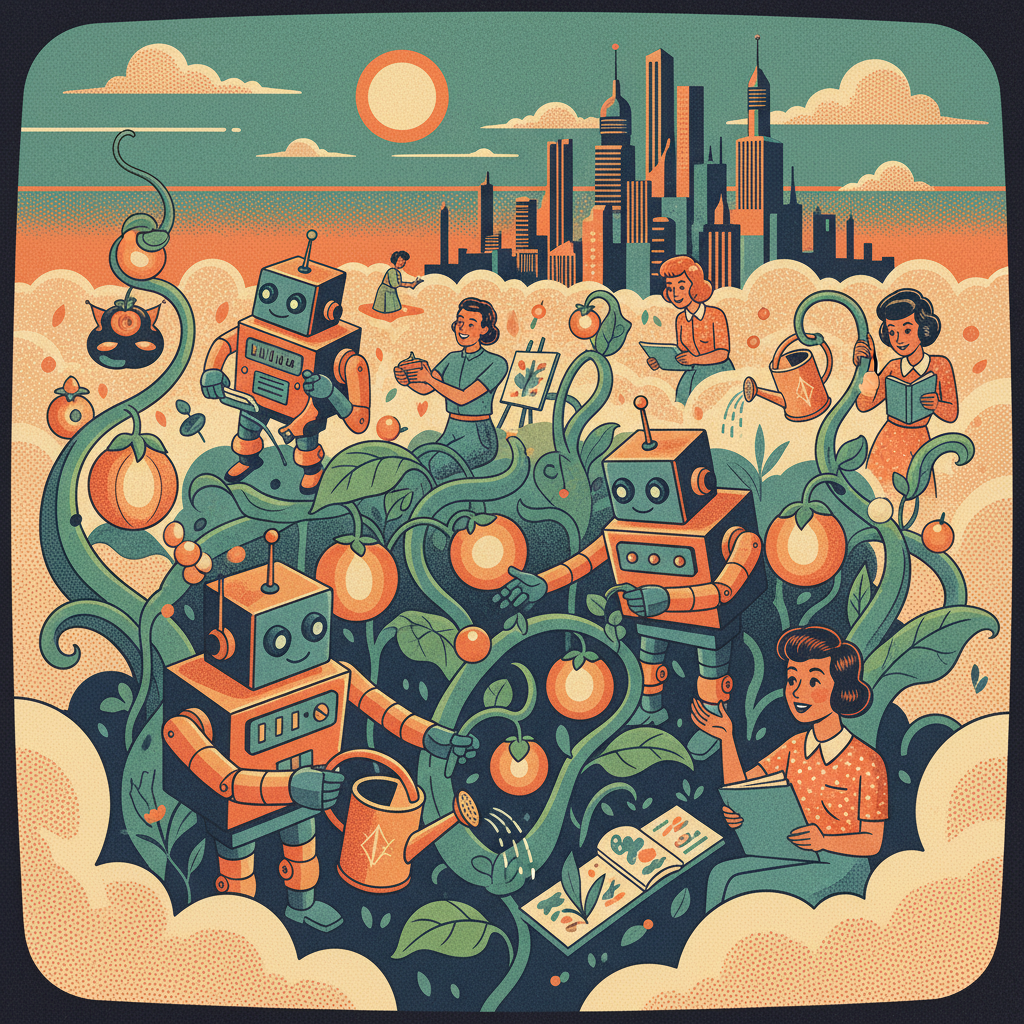
Imagine a future, not far off, where the daily grind fades away, and work itself transforms from a necessity into a choice. This is the profound vision shared by Elon Musk, who foresees a world within the next decade or two where millions of intelligent machines and advanced AI systems usher in an era of such boundless productivity that human labor, as we know it, becomes truly optional. It’s a world where abundance flows freely, freeing humanity from ancient burdens. He paints a picture where choosing to work might be akin to tending a beloved garden – an activity pursued for joy, passion, or personal fulfillment, rather than the relentless pursuit of survival.
The Dawn of the Machine Age
At the very heart of this remarkable future stands a new kind of entity: Tesla’s Optimus humanoid robot. Musk envisions Optimus not merely as a product, but as the foundational pillar of an entirely new economy, a robotic workforce capable of undertaking tasks currently performed by human hands. Such is his conviction that he aims for these intelligent machines to comprise an astonishing 80% of Tesla’s future worth. While the journey to mass production has seen its challenges and delays, these are viewed as the natural growing pains of bringing such a monumental change into being.
A New Standard of Care
Perhaps one of the most breathtaking promises of this automated age lies in the realm of health. Within the next ten years, Musk foresees a time when robotic surgeons will not only outnumber their human counterparts but will surpass them in skill and precision. By the year 2030, the Optimus robots are predicted to achieve a level of medical excellence that would astound, providing a caliber of care that exceeds even the privileged treatment currently available to world leaders. This profound shift would not only address critical shortages in medical personnel but would unlock advanced treatment capabilities, potentially ushering in an era of unprecedented health and longevity for all.
Beyond Scarcity: A World of Abundance
The implications of such pervasive automation extend far beyond mere convenience; they touch the very fabric of human society. In this envisioned future, the age-old specter of economic constraint would vanish. Musk speaks of a “universal high income,” not as a handout, but as a natural consequence of limitless productivity. In this world, the very concept of poverty would become a relic of the past, and the urgent need to save money would dissolve. With intelligent machines meticulously handling every aspect of production and service delivery, the worry of ‘shortage’ would simply cease to exist, replaced by a constant, flowing abundance of all goods and services.
When Gold Loses its Luster
Pushing the boundaries of imagination even further, Musk suggests that the very institution of money, a cornerstone of human civilization for millennia, might eventually become irrelevant. He draws inspiration from Iain M. Banks’ iconic *Culture* series, a fictional universe where superintelligent AI has created a post-scarcity society, rendering traditional employment and currency obsolete. In such a future, Musk posits, money might simply cease to hold meaning, becoming a vestige of a bygone era – a concept no longer necessary when everything one could ever need or desire is readily available.
The Evolution of Intelligence
Beyond the physical labor of robots, lies the boundless potential of Artificial Intelligence. Musk envisions the emergence of Artificial General Intelligence (AGI) potentially within this very year, an intelligence that could swiftly surpass the collective intellect of all humanity by 2030. This monumental leap in cognition promises to unlock solutions to problems we currently deem insurmountable. Indeed, he dares to suggest that with advanced AI, even human mortality itself could be reframed not as an inevitability, but as a complex ‘programming issue’ awaiting a solution, hinting at the profound possibility of vastly extended human lifespans.
Gazing into the Future: A Journey, Not a Leap
Yet, as with all grand visions that challenge the very foundations of our present reality, there are voices of caution and introspection. While the ultimate destination of full automation and post-scarcity is a compelling one, questions arise regarding the swiftness of this transformation. Reports from institutions like the Yale Budget Lab note that despite recent AI advancements, significant disruption to the broader labor market has yet to manifest. Experts acknowledge the powerful trajectory towards an automated future but counsel a more measured expectation for the timeline, pointing to the inherent complexities of both advanced robotics development and the gradual integration of AI into the intricate tapestry of our workplaces. These insights remind us that while the future Musk envisions may indeed await, the path to such a profound transformation is likely to be a journey marked by both remarkable leaps and thoughtful, deliberate steps.
Leave a Reply