





- Colossus AI Gigafactory Power
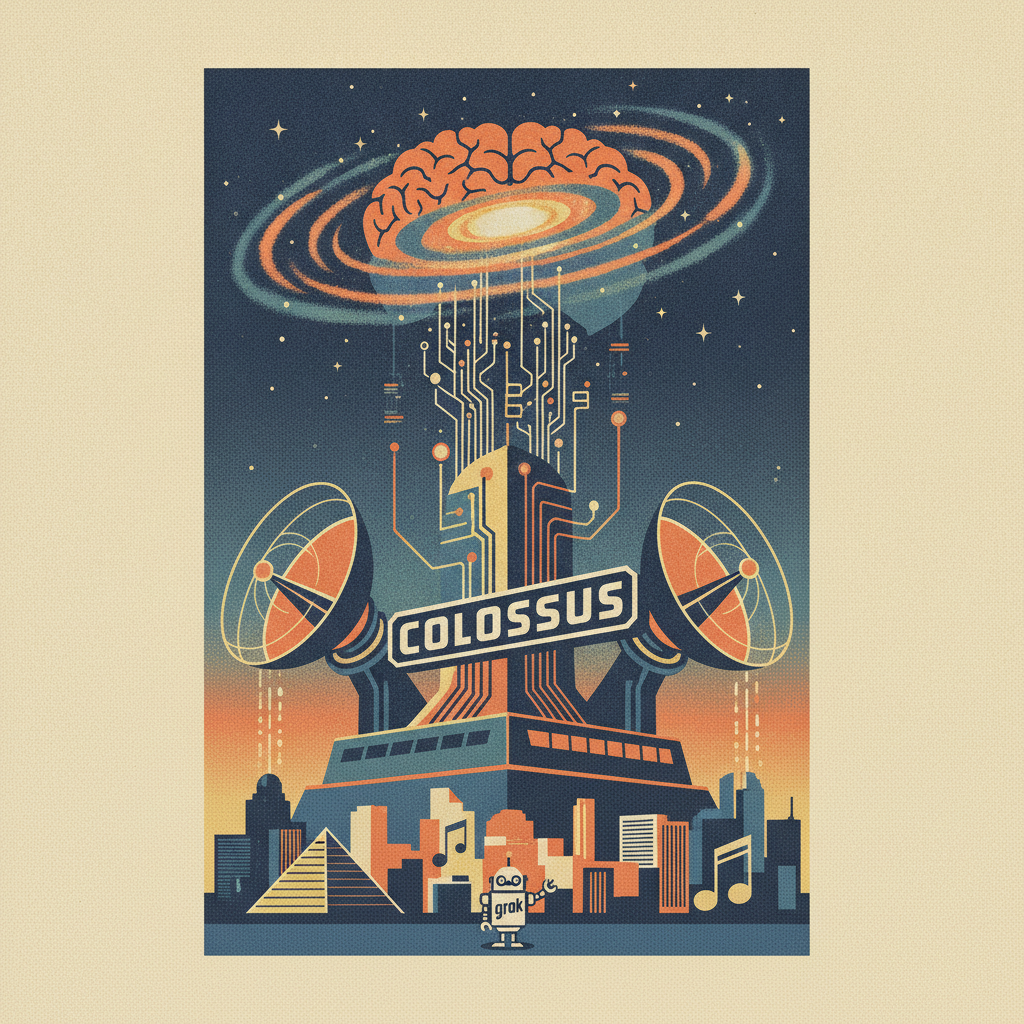 Imagine a mind so vast, it could learn from the entire internet, helping us understand the universe in new ways. This is the ambitious vision behind **Colossus**, a monumental supercomputer project recently announced by Elon Musk. Nestled in Memphis, Tennessee, Colossus is hailed as the **world’s most powerful AI training cluster**, designed to forge the intelligence of the Grok chatbot and fuel the global race for advanced AI. The Heart of a Digital Titan At Colossus’s core lie an unfathomable number of Graphics Processing Units (GPUs), the digital ‘brain cells’ enabling AI to learn and reason. Initially, a breathtaking **100,000…
 - AI Knows: Truth or Illusion?
 When we talk about artificial intelligence, we often find ourselves using human terms to describe machine capabilities. We say AI “learns,” AI “decides,” and, perhaps most interestingly, AI “knows.” But what does it truly mean for a machine to “know” something? Is it anything like the way you or I know that the sky is blue, or that a good cup of tea can fix most of life’s smaller problems? As it turns out, the answer is both fascinatingly simple and profoundly complex, challenging the very bedrock of what we humans consider “truth.” The Machine’s “Knowledge”: A Different Kind of…
 - Grok AI & Colossus Supercomputer
 In a world constantly reaching for the stars, a new dawn of intelligence is breaking on Earth, meticulously crafted by human hands and minds. A vision, spearheaded by Elon Musk, has begun to take tangible form with the training of an advanced intelligence named Grok. This marks not just a step, but a profound leap into an era where machines are being taught to seek truth and understand our complex reality. At the heart of this monumental undertaking lies a structure of unprecedented scale and power: Colossus. More than just a machine, Colossus is the largest and most potent AI…
Killed by Robots
AI Artificial Intelligence / Robotics News & Philosophy