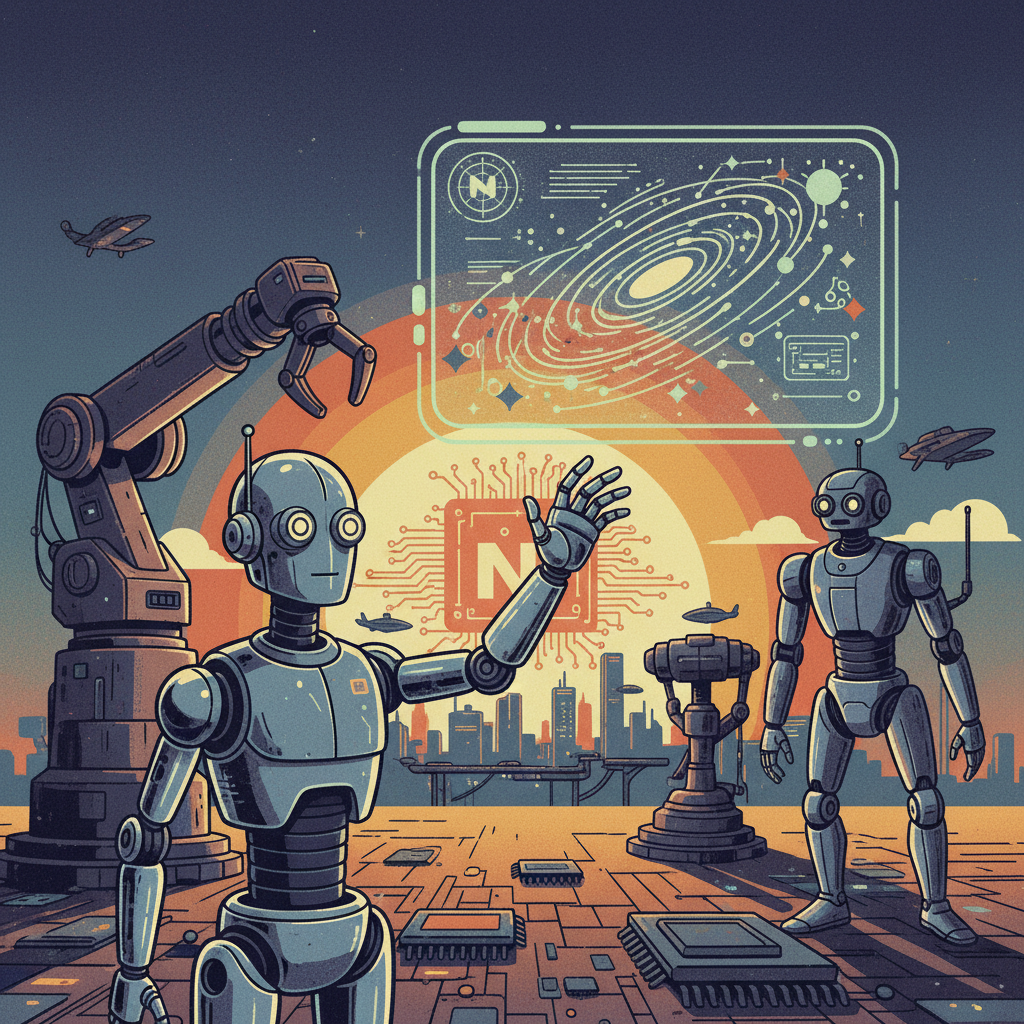
Imagine a new dawn for robots – not just machines following strict commands, but intelligent beings that can truly see, think, and act on their own, right here in our world. This isn’t science fiction anymore. A groundbreaking movement called Physical AI is bringing this vision to life, and NVIDIA, along with leaders like FANUC and ABB, are at the forefront, shaping a future where robots are as adaptable and intuitive as we are.
At its heart, Physical AI is about giving robots the ability to understand and respond to the messy, unpredictable real world. Think of it this way: old robots were like talented musicians who could only play songs they’d been perfectly taught, note by note. Physical AI robots are like jazz masters – they can improvise, adapt, and create something new on the fly, even when faced with unexpected changes. This means robots can now tackle jobs in bustling factories, intricate surgeries, or even help guide autonomous vehicles through city streets, filling vital roles and boosting our efficiency. NVIDIA’s CEO, Jensen Huang, believes this is a massive shift, suggesting that soon, every industrial company will also be a robotics company.
The Foundations of a Thinking Robot
NVIDIA has built a powerful toolkit to make this possible, giving robots the “brains” and “playgrounds” they need to learn and grow:
- Virtual Worlds for Practice: Using tools like Isaac Sim and Omniverse, engineers can create perfect digital copies – called “digital twins” – of entire factories or individual robots. Here, robots can practice countless tasks, learn from mistakes, and perfect their movements in a safe, virtual space before ever touching the real world. It’s like a limitless training ground where they can learn at lightning speed.
- Tiny, Powerful Brains: NVIDIA’s Jetson and IGX Thor modules are compact computer “brains” that fit right inside robots. These allow robots to process information from all their sensors – cameras, microphones, touch sensors – in real-time, making instant decisions right where the action is. This is crucial for navigating, interacting, and adapting in dynamic environments like a manufacturing line or an operating room.
- Core Intelligence Models: Think of Cosmos 3 and Isaac GR00T as the deep learning models that give robots their fundamental understanding of the world and how to move within it. These are the core intelligences that power complex behaviors, especially for advanced machines like humanoid robots.
- A Blueprint for Learning: The Physical AI Data Factory Blueprint helps generate and organize the vast amounts of information robots need to learn. This streamlines the process, making it faster and easier to teach robots new skills for everything from factory work to self-driving cars.
Working Together to Build the Future
NVIDIA isn’t doing this alone. They’ve teamed up with global leaders to bring these advancements into every corner of our lives:
Smarter Factories with FANUC
FANUC, a giant in industrial robots, is integrating NVIDIA’s technology into their systems. Imagine an operator simply telling a robot, “Move these parts to the new assembly line,” and the robot understands, figures out the best way, and reconfigures itself without needing a programmer. This is already happening, making factories more flexible and efficient than ever before.
Expanding the Reach with ABB and YASKAWA
Other titans of industry, ABB and YASKAWA, are also joining this powerful ecosystem. They are embracing NVIDIA’s simulation tools and edge AI to bridge the gap between virtual design and actual production, pushing the boundaries of what industrial robots can do.
Beyond the Factory Floor
- Humanoid Helpers: Companies like Agility and Hexagon Robotics are giving lifelike humanoid robots the ability to reason and act in real-time, showcasing them in simulated stores where they can respond to voice commands.
- Precision in Healthcare: In operating rooms, Johnson & Johnson and Medtronic are using NVIDIA’s AI to power surgical robots, making procedures more precise and offering real-time insights to doctors.
- Logistics and Infrastructure: From intelligent in-cabin AI for construction giant Caterpillar to predictive maintenance for Hitachi’s trains, robots are making our infrastructure smarter and safer.
- Autonomous Journeys: The future of self-driving is also being reshaped, with partnerships involving Uber and Hyundai, aiming for fleets of robotaxis that can navigate our roads with unparalleled intelligence.
A New Era Dawns
These advancements mark nothing less than a “Big Bang” for robotics. By creating open, accessible platforms, NVIDIA is fostering an environment where innovation can flourish at an incredible pace. What was once confined to the realm of imagination – robots that truly perceive, reason, and act – is now becoming a tangible reality, promising to transform factories, healthcare, and countless other aspects of our world by as early as 2026. We are witnessing the birth of a new age, where intelligent machines will work alongside us, shaping a future we’ve only dreamed of.
Leave a Reply