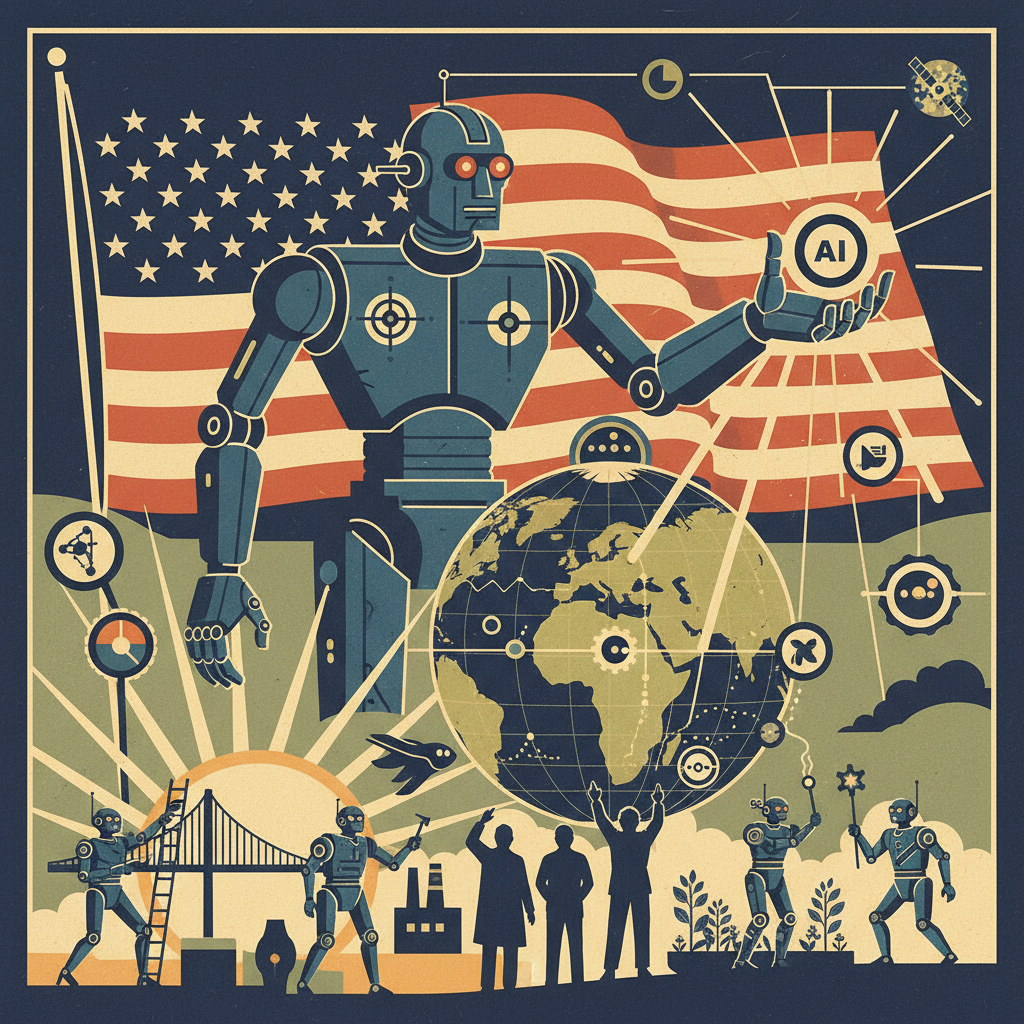
A monumental endeavor is unfolding, one that promises to reshape the very fabric of our future and redefine global leadership. The United States is embarking on a profound strategic shift, placing robotics at the very heart of its national ambition. This isn’t merely about building smarter machines; it’s about harnessing the power of artificial intelligence, allowing it to move and act in our physical world, and securing a pivotal role in the unfolding age of intelligent automation.
For too long, another nation has forged ahead with remarkable speed. China has established a formidable presence in the world of robotics, outfitting its industries with four times more robots than the US by 2024. Their ambition stretches even further, with a plan to unleash 10,000 human-like robots by the close of 2025, driven by innovative companies like UBTECH, Unitree, Fourier, Agibot, and EngineAI. This breathtaking scale grants them significant advantages in manufacturing, efficiency, and sheer output, all nurtured by a decade of strategic government investment. It’s a compelling testament to their vision and commitment, one that has undoubtedly spurred America’s awakening.
In response, a unified resolve is emerging within the United States. Leaders now recognize robotics not just as a technological frontier, but as an indispensable pillar for economic prosperity, the revitalization of American industry, and our competitive standing on the global stage. There is a strong sentiment that innovation must not be shackled by excessive regulation, allowing the spirit of invention to flourish and keep pace with rivals. The highest echelons of government are taking notice; plans are underway for a significant executive order on robotics in 2026, with key officials like Commerce Secretary Howard Lutnick engaging directly with the visionary minds leading robotics companies. Even the Department of Transportation is exploring how these future machines will move within our world.
The call for a robust national strategy echoes from the heart of American innovation. Titans like Tesla, Boston Dynamics, and Agility Robotics are championing a comprehensive plan, advocating for essential components such as a dedicated federal robotics office, vital tax incentives, specialized training programs to cultivate the workforce of tomorrow, and crucial funding for cutting-edge research and the scaling of production. Industry voices are clear: without such decisive action, the US risks not only falling behind in robotics but also in the broader artificial intelligence race itself.
Yet, this grand vision requires an unseen foundation of immense power. American technology giants are making historic commitments, pledging an astonishing $650 billion in 2026 to erect the colossal infrastructure of the AI era, primarily vast data centers. Companies like Amazon, with its $200 billion commitment, Alphabet’s $175-185 billion, Meta’s $115-135 billion, and Microsoft’s nearly $105 billion, are investing in the very nervous system of advanced AI. These colossal digital fortresses will serve as the indispensable computational backbone, powering the sophisticated learning and deployment of intelligent robots, even as some local communities grapple with the implications of these new facilities.
The Dawn of Intelligent Machines: Key Trends Shaping 2026
As we stand on the precipice of this new era, five transformative trends illuminate the path forward for robotics:
- The Expanding Mind of AI and Autonomy: Robots are gaining ever-more sophisticated cognitive abilities. Analytical AI allows them to discern patterns and predict needs, offering insights for proactive maintenance. Generative AI empowers them to learn and adapt through simulations, envisioning solutions for tasks. And Agentic AI equips them with the capacity for complex decision-making, navigating intricate environments with a blend of self-direction and programmed intelligence.
- The Seamless Blend of Worlds: IT-OT Convergence: The barrier between the digital brain and the physical body of a robot is dissolving. By merging information technology (IT), which processes vast streams of data, with operational technology (OT), which controls the physical movements of machines, robots gain unprecedented versatility. This powerful synergy enables real-time insights and is a cornerstone of the advanced manufacturing known as Industry 4.0.
Beyond these, the relentless march of semiconductor technology, the pervasive spread of industrial automation, and the widespread commercialization of new innovations — vividly showcased at events like CES 2026 — are shifting AI from a realm of abstract promise to one of tangible, widespread deployment. The world’s financial advisors are taking notice, with a significant 85% increasing their focus on the burgeoning opportunities within robotics.
Amidst this technological revolution, humanoid robots — machines designed to mimic human form and movement — are captivating attention in both nations. While their allure is undeniable, the industry still grapples with questions of their immediate practical application. Yet, the US strategy remains steadfast: prioritize rapid, market-driven deployment over heavy-handed regulation. In this grand competition, robotics is seen as nothing less than the physical manifestation of AI leadership, the tangible embodiment of our intelligence and ingenuity stepping forth into the world.
Leave a Reply