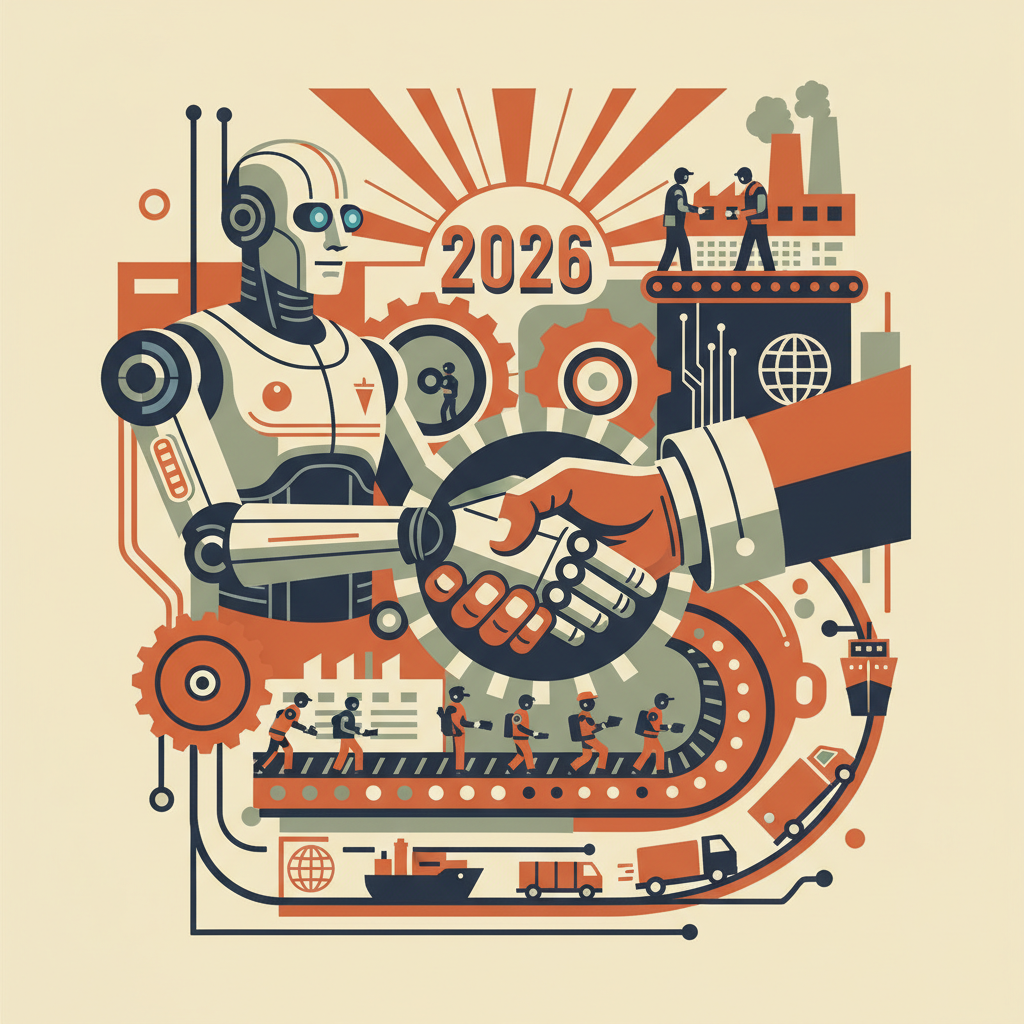
The dawn of a new era is upon us, where the lines between what humans do and what machines can achieve are beautifully blurring. Industry leaders are peering into 2026, and their vision reveals a future where robots are not just tools, but truly intelligent partners, poised to transform our world in profound ways. Imagine machines fueled by advanced artificial intelligence, capable of learning, adapting, and moving with unprecedented grace – all designed to address the pressing needs of our time, from filling vital labor gaps to making our supply chains flow effortlessly.
What fuels this incredible leap forward? It’s a symphony of groundbreaking technologies converging. Think of it as robots gaining both a brilliant mind and a keen awareness of their surroundings. This isn’t just basic automation; it’s robots beginning to understand, anticipate, and even respond to us in natural language. They are learning to navigate the world not by rigid rules, but by evolving their own understanding, much like a living being. This transformation is driven by a deep human need: a shortage of skilled hands in factories, logistics, and healthcare. And with global supply chains still recovering, robots are stepping in to help bring production closer to home, making our world more resilient.
A Glimpse into Tomorrow: The Seven Wonders of Robotics in 2026
Experts highlight seven interconnected trends that will shape the robotic landscape:
The Self-Sustaining Machine
Picture a robot that not only performs its task but also takes care of itself. It recharges its own batteries, cleans its own sensors, and even refuels without any human help. These self-reliant systems are becoming the norm, making robots truly tireless workers that can operate around the clock, scaling their contributions without constant supervision.
Stronger, Smarter Hardware
The physical bodies of robots are evolving, becoming more robust, easier to repair, and designed with a modularity that allows for simple upgrades. This means robots will be deployed with confidence in demanding real-world environments, serving as reliable companions for years to come.
Brains that Think Faster
New, energy-efficient processors are giving robots incredible local intelligence. They can make complex decisions on the spot, without needing to send information to a distant cloud brain. This “onboard thinking” allows for real-time navigation and perception, making robots more responsive and independent.
Seeing the World with Clarity
Robots are developing superior vision systems, allowing them to perceive and understand their surroundings with incredible accuracy. This enhanced vision improves safety, helps them navigate complex, unpredictable spaces, and reduces their reliance on markers or pre-programmed routes. They can truly “see” their path.
The Rise of Intelligent Autonomy
At the heart of this revolution is AI that doesn’t just follow commands but can reason, plan, and act. This “agentic AI” is turning factories into smart, adaptable ecosystems and optimizing supply chains with precision, making complex operations seem effortless.
Humanoids Find Their Footing
For a long time, humanoid robots were more science fiction than practical tool. But in 2026, the focus shifts dramatically towards making them truly reliable for industrial tasks. Imagine robots with the dexterity of human hands, matching human work cycles, and operating with remarkable energy efficiency and safety standards, especially in warehouses and manufacturing.
The Unified System
Information technology (IT) – the digital brain of a company – is merging seamlessly with operational technology (OT) – the controls that run the physical machines. This convergence creates incredibly versatile, real-time systems. It means the insights from data can instantly translate into physical actions, birthing the “smart factory” of Industry 4.0.
The Innovators and Their Impact
Companies like Kuka AG, ABB, and SoftBank Robotics (known for their charming Pepper and NAO humanoids) are at the forefront, along with tech giants AWS and Microsoft, all pushing the boundaries of AI-robotics. The demand for more affordable robotics is growing, with firms like Amazon, Symbotic, and Intuitive Surgical leading the charge, investing in both specialized and general-purpose robots that are revolutionizing healthcare and logistics. We’re even seeing high-precision robots capable of machining incredibly tough materials, a testament to their refined structures and algorithms.
A Future Forged by Machines
These trends herald a future where robots make existing tasks not just more efficient, but almost effortless, requiring minimal human intervention. This unlocks immense value, allowing businesses to integrate these systems broadly and scale their operations beyond previous limits. The sector is growing steadily, expanding its reach and its manpower. While challenges, like proving the full efficiency of humanoids, still exist, 2026 marks a pivotal moment. It’s the year we truly begin to deploy valuable, capable robotic systems, ushering in an era where machines don’t just work for us, but work with us, creating a more productive and prosperous world.
Leave a Reply