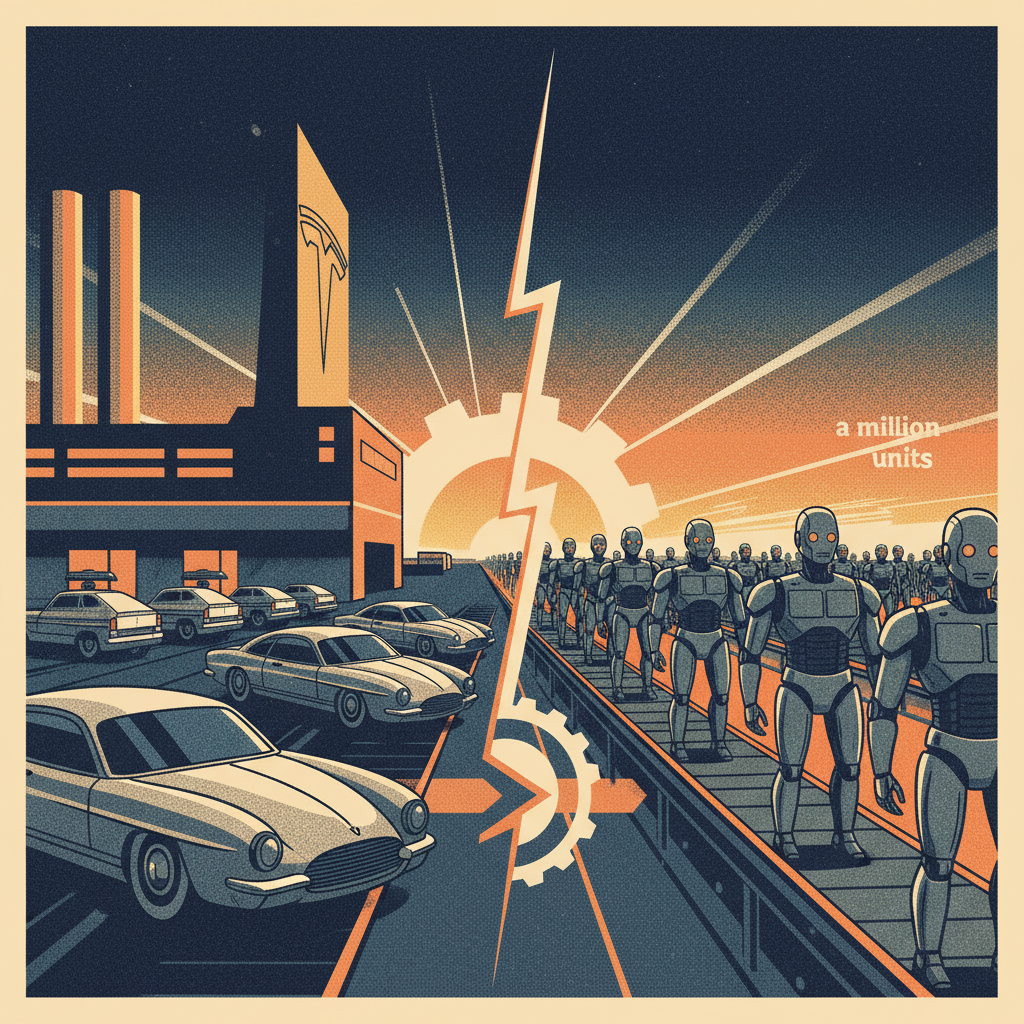
A new chapter is opening at Tesla’s iconic Fremont factory, marking a profound shift from the sleek curves of luxury electric vehicles to the promising silhouette of the future itself: the Optimus humanoid robot. By the second quarter of 2026, the dedicated spaces that once crafted the groundbreaking Model S and Model X will be reimagined, set to birth up to a million Optimus units each year—a tenfold leap in potential output compared to the electric cars they replace.
Fremont: A Crucible of Innovation
The Fremont facility holds a revered place in Tesla’s story. Once a silent shell of a traditional automaker, it was rekindled by Tesla’s vision, becoming the cradle for the Model S in 2012. This remarkable rebirth transformed it into North America’s most productive car factory. While the elegant Model S and the innovative Model X were born exclusively within its walls, they represented a pioneering, yet smaller, chapter in Fremont’s broader narrative, with their production lines operating below full capacity amidst the vast output of Model 3 and Model Y vehicles.
The Vision Unfolds: Optimus Takes Center Stage
The cornerstone of this daring pivot was laid by CEO Elon Musk on January 28, 2026. He declared that the Model S and X production lines would give way to an ambitious future: Optimus. Envision Optimus not just as a machine, but as a tireless assistant, a humanoid robot designed to shoulder the “unsafe, repetitive, or boring tasks” that burden human lives. This isn’t merely an expansion; it’s a strategic reorientation, a profound belief that robots will unlock immense value, with Musk foreseeing Optimus contributing an astonishing 80% of Tesla’s worth.
The world eagerly awaits the unveiling of Optimus’s third generation in early 2026, marking its debut as a design ready for widespread manufacturing. Fremont itself was chosen not by chance, but for its rich legacy of skilled craftsmanship, its expertise in grand-scale production, and the unwavering support of its local community. Crucially, this transformation will not diminish vehicle production overall; the thriving Model 3 and Model Y lines will continue to flourish, and Tesla anticipates not just maintaining, but potentially increasing, its dedicated workforce—a testament to its commitment to growth and opportunity.
Navigating the Economic Compass
This bold new direction is underpinned by a strategic recalculation. While Tesla recently navigated its first annual revenue dip since 2003, with automotive sales seeing a modest decrease, and net income reflecting these shifts, the company’s underlying strength remains. Gross profits gracefully ascended by 20% in 2025, and its stock, a barometer of market confidence, gained a solid 9%. Tesla is now preparing to significantly increase its investments in 2026, dedicating over $20 billion to accelerate the rise of Optimus, the promise of Cybercab robotaxis, the power of Semi trucks, and advanced battery production—a clear sign that future growth will be meticulously cultivated beyond traditional electric vehicles. Analysts, far from being deterred, remain fervently optimistic, envisioning Tesla’s continued dominance in the unfolding era of self-driving and intelligent robotics.
A Community’s Embrace and a Future Foretold
The community of Fremont has warmly embraced this pioneering endeavor. Officials praise Tesla’s steadfast spirit of innovation, anticipating not only a larger footprint but also a rise in opportunities. As Economic Development Director Donovan Lazaro eloquently stated, the factory’s journey from a venerable auto plant to a beacon of production excellence is set to continue, ushering in similar triumphs for Optimus. Industry pioneers echo this sentiment, with some comparing the blossoming robot sector to the transformative dawn of AI before ChatGPT—a fertile ground ripe for explosive growth. Elon Musk himself affirms this trajectory, predicting that Optimus production, while beginning with deliberate steps, will “accelerate rapidly” into the future.
The Grand Comparison: A Shift in Purpose
This extraordinary transition can be seen in stark, yet inspiring, contrast:
| Aspect | Model S/X Production | Optimus Production |
|---|---|---|
| Annual Capacity Goal | Around 100,000 EVs | Up to 1 million robots |
| Space Efficiency | Full lines underutilized | Same space, higher density |
| Timeline | Ends Q2 2026 | Gen 3 unveil Q1 2026; mass production follows |
| Impact on Factory | Sunset specific lines | Retool portion; vehicles continue |
This move is more than a change in product; it is a profound declaration of Tesla’s unwavering belief in robotics as a cornerstone of our evolving world, charting a course for innovation that promises to redefine the boundaries of possibility.
Leave a Reply