On the night of 29 December 1972 a four-month-old Lockheed L-1011 flew itself into the Florida Everglades while its three pilots and a jumpseat rider argued about a burned-out light bulb. Nothing on Eastern Air Lines Flight 401 had failed except the two bulbs in the nose-gear position indicator, but the aircraft's autopilot had stopped holding the assigned 2,000 feet, and the design of the L-1011's autoflight system meant that change of state could happen without any warning the crew would notice. Of the 176 people aboard, 101 died. The US National Transportation Safety Board blamed the flight crew for not watching their instruments, but its own report and the Federal Aviation Administration's later case study both describe the accident as an early, lethal demonstration of what happens when humans trust an automated system to keep flying while their attention goes elsewhere.
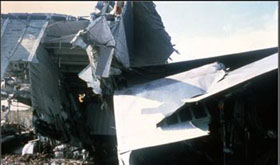
What happened
Flight 401 left John F. Kennedy International Airport at 21:20 eastern time with 163 passengers and 13 crew, bound for Miami. The approach was normal until the gear was lowered and the green light confirming the nose gear was down and locked never came on. The captain broke off the approach, and Miami Approach Control put the jet at 2,000 feet on a westerly heading out over the Everglades so the crew could work the problem. The captain then told the first officer, who was hand-flying, to engage the autopilot.
From that point the flight deck emptied out, functionally. The first officer pulled the indicator light lens assembly and jammed it trying to put it back. The captain helped him wrestle with it. The second officer went down into the forward electronics bay to sight the nose-gear alignment rods through an optical port, and later an Eastern maintenance specialist riding the jumpseat went down after him. At 23:37:24 a small downward acceleration transient cost the aircraft 100 feet, which was corrected. Roughly a minute and a half later the jet began a slow descent that nobody on board noticed. At 23:40:38 the altitude-alert C-chord sounded once, marking a 250-foot deviation from the selected altitude. The NTSB found no comment about it on the cockpit voice recorder and no corrective pitch input on the flight data recorder.
At 23:42:05 the first officer said the altitude had changed, then asked whether they were still at 2,000 feet. The captain's answer was an alarmed question. Six radio-altimeter beeps followed, and at 23:42:12 the L-1011 struck the swamp in a 28-degree left bank about 18.7 statute miles west-northwest of Miami International Airport. The night was clear and moonless, over unlit terrain, so there was no visual cue of the descent. The nose gear, it turned out, had been down and locked the whole time.
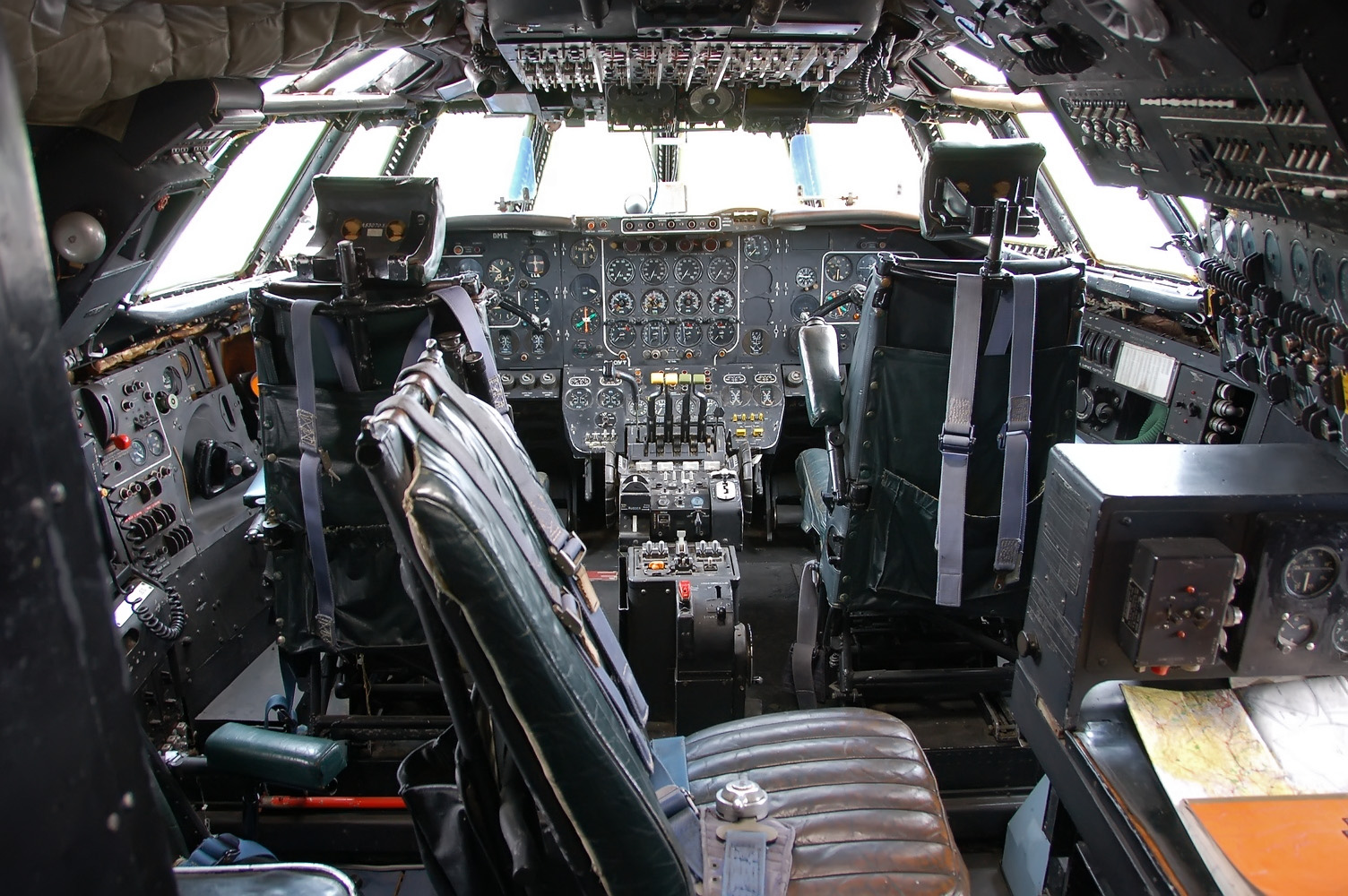
The automation feature at the centre of the case
The L-1011's autopilot flight director system had two pitch computers, "A" feeding the captain's displays and "B" the first officer's. Its basic mode, control wheel steering, let the pilot change attitude by pushing on the yoke, and the altitude hold function could be layered on top of either that basic mode or the full command mode. Crucially, a pitch force applied through a control wheel would drop altitude hold and leave the autopilot stabilising whatever attitude it then had, while the engage lever stayed exactly where it had been set. The FAA's own case study of the accident spells out the consequence: altitude hold could go away with no positive alert, the only cues being a light going out on the glareshield and the loss of an "ALT" legend on the annunciator panels.
The accident aircraft also had mismatched pitch computers. The "A" computer released altitude hold at 15 pounds of control-column force, the "B" computer at 20, a difference created by a nonmandatory Lockheed service bulletin issued in July 1972 that lowered the release threshold. Under the "A" configuration, a shove somewhere between 15 and 20 pounds could have dropped altitude hold with an indication on the captain's panel but none on the first officer's. The NTSB examined this carefully and then set it aside: it could not determine which system had been engaged, but believed system "B" was the one in use, in which case both annunciators would have agreed, so the mismatch was not judged a critical factor. What the Board did conclude in its findings is that the autopilot was being used in basic control wheel steering and that the crew did not appreciate how little force it took to change the aircraft's attitude in that mode.
The Board never established with certainty what began the descent. It suspected the captain nudged the column while turning to speak to the second officer, and it found that a series of manual thrust reductions in the final minutes deepened the sink rate. It ruled out the autothrottle system as the cause of those reductions. On Eastern's configuration the flashing amber altitude-alert light was inhibited below 2,500 feet radar altitude, so as the jet sank through 1,750 feet the crew got one half-second tone and nothing else.

Detection, rescue and response
The only person who saw the descent for what it was could not be sure of it. The Miami approach controller noticed a 900-foot readout in the flight's data block and radioed a vague enquiry about how things were coming along, without mentioning altitude. He testified that momentary bad altitude readings were common enough that he had no particular concern, and the FAA's review notes there was no requirement at the time for a controller to challenge an altitude deviation at all.
Rescue came from the swamp itself. Airboat operators out frog hunting saw the flash and reached the wreckage first, guiding Coast Guard helicopters in with a headlamp, according to NBC 6 South Florida's 50th-anniversary account. Survivors were scattered across sawgrass and shallow water, some soaked in kerosene and unable to move; a Miami Herald retrospective republished by Aviation Pros records that the last group was lifted out at about 03:30, roughly four hours after impact, and that a surviving flight attendant kept people talking and singing Christmas songs while they waited.
The Safety Board did not wait for its final report to act. Recommendations A-73-11 through A-73-13, adopted in April 1973 and issued to the FAA Administrator in May, asked for a nose-wheelwell light switch to be placed near the optical sight so one person could use the system alone, a placard explaining how to use it, and modification of the altitude alert on Eastern-configured L-1011s so the flashing warning worked below 2,500 feet. The final report, adopted 14 June 1973, added a recommendation that the FAA study whether the ARTS III radar system could help controllers assist crews during marked altitude deviations. The FAA's acting administrator replied in May 1973 that the recommendations were under study.
In their own words
The cockpit voice recorder transcript quoted in the NTSB report captures the moment the crew realised, with about seven seconds left, that the aircraft had left its assigned altitude:
We did something to the altitude.
What?
We're still at two thousand, right?
Hey, what's happening here?
NTSB Aircraft Accident Report NTSB-AAR-73-14
On the design question, the FAA's case study is blunt about how invisible the mode change could be:
Thus, it is possible to disengage altitude hold without an accompanying alert to the flight crew.
FAA Lessons Learned, Lockheed Model L-1011
And on what the crew actually received as a warning, the same study notes that on the accident aircraft the alert amounted to a single brief tone rather than the tone plus flashing light that later training films depicted.
Why it moves the needle
Flight 401 is one of the founding cases in the literature of automation surprise. The NTSB used the report to warn, in terms that read as prescient half a century later, that crews were becoming more dependent on increasingly reliable avionics, that basic hand-flying and instrument supervision were eroding as a result, and that pilots' faith in the autopilot exceeded what its design and certification actually justified. The specific failure mode is the one that keeps recurring across automated systems: a mode change the machine treated as routine, communicated through a lamp going dark, in front of operators whose attention was fully consumed by a trivial secondary problem.
The institutional consequences were large. The FAA identifies the accident as one of the precipitating events behind the industry-wide adoption of crew resource management, later codified in Part 121 training requirements, and the immediate recommendations tightened both the gear-inspection design and Eastern's altitude alerting. In needle-moving terms, this is a 1972 incident that established the template for every later argument about mode confusion and automation complacency, from glass-cockpit airliners to driver-assistance systems: the automation did not malfunction, it did exactly what it was built to do, and 101 people died because nobody was told it had changed its mind about holding altitude.
Timeline
- 15 Jul 1972Lockheed issues nonmandatory Service Bulletin No. 093-22-012 calling for pitch computers to be modified so altitude hold releases at 15 pounds of control force rather than 20, the change that left N310EA with mismatched computers.
- 29 Dec 1972, 21:20Eastern Air Lines Flight 401 departs John F. Kennedy International Airport for Miami with 163 passengers and 13 crew aboard a Lockheed L-1011, registration N310EA.
- 29 Dec 1972, ~23:34After the nose-gear green light fails to illuminate, the crew abandons the approach, climbs to 2,000 feet and is vectored west over the Everglades; the captain orders the autopilot engaged at 23:36:04.
- 29 Dec 1972, 23:37:24A 0.04 g downward transient costs the aircraft 100 feet, arrested by a pitch-up input; the NTSB later concluded a control-column force around this time had probably dropped the autopilot's altitude hold.
- 29 Dec 1972, 23:40:38The half-second altitude-alert C-chord sounds, signalling a 250-foot deviation. No crew comment appears on the voice recorder and no corrective pitch input on the data recorder.
- 29 Dec 1972, 23:41:40The Miami approach controller, having seen a 900-foot readout, asks the crew how things are going without mentioning altitude.
- 29 Dec 1972, 23:42:12The aircraft strikes the Everglades in a 28-degree left bank, 18.7 statute miles west-northwest of Miami International Airport, and is destroyed.
- 30 Dec 1972, ~03:30The last group of survivors is evacuated, about four hours after impact, after airboat operators and Coast Guard helicopters worked the wreckage site through the night.
- 11 Apr 1973The NTSB adopts Safety Recommendations A-73-11 through A-73-13 on the nose-wheelwell light switch, an explanatory placard, and removal of the below-2,500-foot inhibit on Eastern's altitude alert light; they are issued publicly on 2 May 1973.
- 14 May 1973The FAA's acting administrator replies that the recommendations are being studied and that action will be advised once evaluation is complete.
- 14 Jun 1973The NTSB adopts final report NTSB-AAR-73-14, finding the probable cause to be the crew's failure to monitor flight instruments during the last four minutes, with preoccupation over the gear indication allowing the descent to go unnoticed.
Conflicting accounts
Casualty figures vary across the coverage and should be read against the NTSB's numbers. The Board recorded 163 passengers and 13 crew aboard, with 94 passengers and 5 crewmembers killed outright and two survivors dying later of their injuries, giving the widely cited total of 101 dead and 75 survivors, which the Aviation Safety Network database also records. The FAA's case-study summary line states that 112 of 163 people on board were killed, a figure that contradicts the detailed breakdown given elsewhere on the same page and appears to be an error. The Miami Herald retrospective describes the aircraft descending "from 20,000 feet", which conflicts with the assigned holding altitude of 2,000 feet documented throughout the accident report. Reported but unconfirmed details of this kind do not affect the core account: the aircraft was cleared to hold at 2,000 feet, drifted down undetected, and struck the Everglades.