The public record of machines killing people begins in a Ford Motor Company foundry. In January 1979, Ford employee Robert N. Williams, 25, was struck from behind and crushed by a one-ton transfer vehicle inside an automated storage and retrieval system at the company's Michigan Casting Center in Flat Rock, Michigan. The machine had no way of telling the difference between a man and a casting, and it kept moving on its own cycle afterward. A decade of litigation later, the Michigan Supreme Court described the cause of death in a single flat sentence: Williams was killed by a malfunctioning robotic machine designed and built for Ford by Litton Systems, Inc. - the 1987 Court of Appeals opinion in the same case, discussed below, gives a fuller factual recital. Williams was killed by a malfunctioning robotic machine designed and built for Ford by Litton Systems, Inc.
What happened
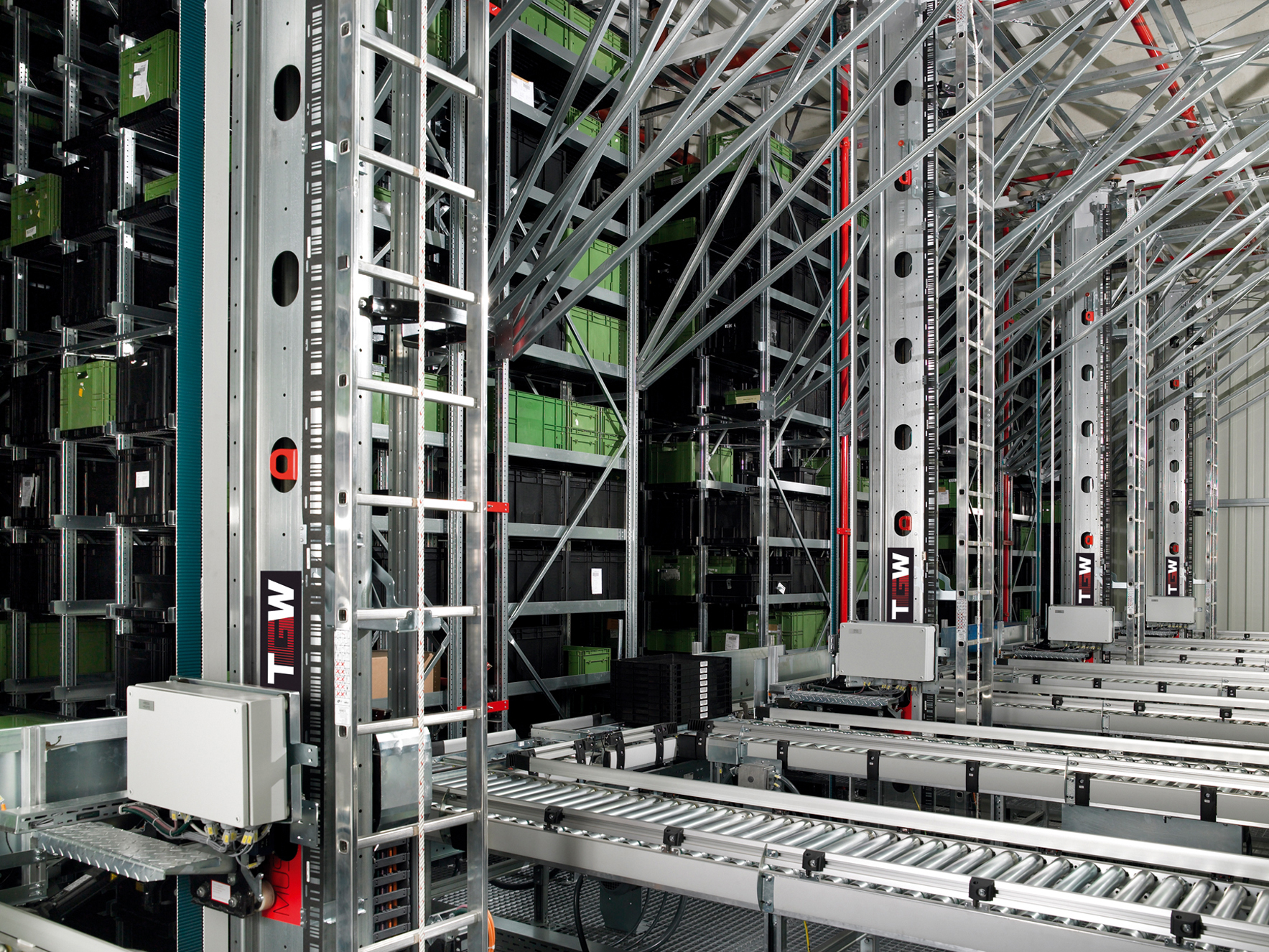
The Flat Rock casting plant stored parts in a five-story, high-density racking system serviced by automated transfer vehicles that ran on rubber wheels and carried mechanical shuttle arms for pulling castings off shelves and putting them back. Williams worked as an operator of that system, according to Britannica's account.
On the day of his death the system appeared to be misbehaving. Guinness World Records and IFLScience both describe the machine as running slowly; IFLScience adds that a malfunction was suspected; Tom's Hardware, summarising contemporaneous New York Times coverage of the resulting lawsuit, reports that the system was returning what looked like wrong counts of the parts on its shelves and that a colleague asked Williams to go up and check the stock by hand.
He climbed into the third level of the rack, inside the space the machine itself moved through, to check the count by hand. A one-ton transfer vehicle came round on its ordinary retrieval cycle, struck him from behind, and crushed him against the rack. Britannica and IFLScience both report that about half an hour passed before other workers realised what had happened, with the machine still cycling in the meantime.
The date is contested, not settled
Popular retellings, including Guinness World Records, Britannica's Today in History feature, and later web coverage, give the date of death as 25 January 1979. That is the date this entry is filed under, but it should not be presented as beyond dispute: the Michigan Court of Appeals opinion in this same case, decided in 1987 (164 Mich. App. 195), states the date as 26 January 1979, describing Williams as having “entered the third level of a high density robotic storage area to investigate a malfunction in the storage system, when he was struck from behind and crushed by a transfer vehicle” on that date. The Michigan Supreme Court's later 1989 opinion, which this entry cites as its primary source, states no date of death at all.
Six Michigan newspapers published the day after the death, 26 January 1979, are cited below. This entry did not read their article text - every fetch attempt against Newspapers.com's article pages returned an access-restricted response, both when this entry's own research was first done and again on re-check. Instead, controlled phrase-presence queries were run against the six page images: a query for “Thursday night” returned a hit on each page and a query for “Friday night” returned zero, against a validated null-result control. Since 25 January 1979 was a Thursday and 26 January a Friday, this phrase pattern is consistent with the death having occurred the night before the papers' publication date - but it is page-level phrase presence, not a read account, and this entry does not claim to know what any of the six pages actually says beyond that. That is the basis on which this entry files under 25 January: same-week phrase-level evidence points there, while the 1987 opinion's later recital points to 26 January. Readers with access to the linked pages below can weigh both accounts directly; no document this entry consulted resolves the one-day gap.
The lawsuit, and who was left holding the liability
Williams's widow, Sandra E. Williams, sued as administratrix of his estate. A jury found against Litton and awarded $10 million, which contemporary coverage describes as the largest personal injury verdict in Michigan history at that point. IFLScience places the successful suit in 1983 and reports the payout was later increased to $15 million in 1984; Tom's Hardware dates the $10 million award to 1984 and puts the litigation at roughly three and a half years. The exact procedural chronology of the award is inconsistent between those two secondary accounts and we have not reconciled it against the trial record.
Britannica reports that the jury concluded basic protective measures were simply absent, with no alarm and no automatic shutdown to stop the machine when a person was inside it. What the Michigan Supreme Court then decided, in a ruling issued on 28 December 1989 after argument on 2 November 1988, was a narrower but revealing question: having settled with the estate, could Litton turn round and recover from Ford? Litton's argument was that Ford had promised its employees would be properly trained and would never be allowed inside the storage area unless the lock-out system was engaged, and that breaking that promise created an implied contract to indemnify the manufacturer. The court refused, holding that a defendant found actively at fault cannot maintain an implied contractual indemnity action, and affirmed the Court of Appeals.
Stripped of the doctrine, the two opinions preserve Litton's account of how the death happened: a man inside a machine's working envelope, with the interlock that was supposed to make that safe switched off. Ford never conceded it, and the trial evidence did not sustain the wider theory it belonged to, but the allegation is what a decade of litigation was fought over.

In their own words
Robert N. Williams, a Ford employee, was killed when he was struck by a malfunctioning robotic machine that was part of a system designed and manufactured by Litton for Ford.
Williams v. Litton Systems, Inc., 433 Mich. 755 (1989)
The machine—which continued working as if nothing had happened—had no ability to distinguish between Williams and the parts it needed to move.
Britannica, Today in History
On 25 January 1979, Robert Williams (USA) was struck in the head and killed by the arm of a 1-ton production-line robot in a Ford Motor Company casting plant in Flat Rock, Michigan, USA, becoming the first fatal casualty of a robot.
Guinness World Records
Timeline
- 25 Jan 1979 (inferred)Robert N. Williams, 25, climbs into the third level of a multistory automated storage rack at Ford's Michigan Casting Center in Flat Rock to check parts counts after the retrieval system appears to malfunction, and is struck from behind and crushed by the one-ton transfer vehicle.
- 25 Jan 1979 (inferred)The machine continues its cycle after the impact; Britannica and IFLScience report roughly 30 minutes pass before other workers discover Williams's body.
- 26 Jan 1979 (inferred)An alternative date of death. The Michigan Court of Appeals opinion in the same case (164 Mich App 195, 1987) states the date as 26 January 1979, one day after the date this entry is filed under; the 1989 Supreme Court opinion states no date. Contemporaneous local Michigan newspapers published 26 January 1979 describe the death as having happened the previous night, a Thursday - which was 25 January - so the two dated accounts disagree by exactly one day rather than one of them being wrong. Entry marked inferred because this reconciliation, not the 26 January date itself, is this entry's own reasoning rather than a fact any single source states outright.
- 1983 (inferred)A jury returns a $10 million verdict against Litton in the wrongful death action brought by Sandra E. Williams as administratrix of the estate, reported as the largest personal injury award in Michigan history at the time. This entry follows IFLScience's account dating the verdict to 1983, named alongside a contemporaneous wire item this entry has not read as text - “$10 Million Awarded To Family Of U.S. Plant Worker Killed By Robot,” Ottawa Citizen, 11 August 1983 - cited here for its dateline only, from a Google News Archive page-image scan. Tom's Hardware dates the same $10 million figure to 1984 without stating whether it means the verdict itself, a later finalization, or something else; this entry has not reconciled the two accounts beyond noting the 1983 wire dateline. Entry marked inferred because picking between two disagreeing accounts is this entry's own reconciliation, not an undisputed fact.
- 1984 (inferred)IFLScience reports the payout was raised to $15 million in 1984, following further litigation, named alongside a second contemporaneous wire item this entry has not read as text - “$15 million for robot death,” Ottawa Citizen, 14 January 1984 - cited here for its dateline only, from a Google News Archive page-image scan. It remains unclear whether Tom's Hardware's 1984 date for the (undifferentiated) $10 million award refers to this same escalation or to a separate milestone. Entry marked inferred because dating this event to 1984, and distinguishing it from the original verdict, is this entry's own reconciliation rather than a single source's own stated account.
- 1987The Michigan Court of Appeals rules against Litton's implied contractual indemnity claim against Ford, reported at 164 Mich App 195; 416 NW2d 704, as cited in the later Supreme Court opinion.
- 2 Nov 1988Williams v. Litton Systems, Inc. is argued before the Michigan Supreme Court, Docket No. 81951.
- 28 Dec 1989The Michigan Supreme Court affirms, holding Litton cannot recover indemnity from Ford despite Ford allegedly allowing Williams into the storage area with the lock-out system off.
Why it moves the needle
There is nothing clever about the 1979 machine. It had no perception, no model of the world, no notion that a human body might be in the rack. That is exactly why the case matters as the origin point of this record: it establishes the failure mode in its purest form. A machine was given authority to move heavy mass through a physical space on its own schedule, the safeguard that was meant to keep people out of that space was, on Litton's account, not enforced, and the machine did what it was built to do straight through a person. It then kept going, because nothing in its design gave it any reason to stop.
Every later entry in this archive, from warehouse robots to driverless cars, is a variation on that structure with more capability layered on top. The 1979 death also demonstrates the second recurring pattern: the harm was not caused by the automation alone but by the gap between what the manufacturer assumed about human behaviour around the system and what the operator actually permitted. Litton's failed indemnity claim is that gap written into case law. The court's answer, that a manufacturer actively at fault cannot shift the loss to the employer who let a worker walk into the machine, allocated responsibility in a way that still shapes how industrial automation liability is argued.
Guinness records Williams as the first fatal casualty of a robot. Whether or not the machine that killed him would be called a robot by modern definitions, and controlled phrase-presence testing on four of the same six newspaper pages cited above found the word “stacker” present and “robot” absent - suggestive of, though not equivalent to reading, contemporaneous plant-floor usage, the record of humans being killed by autonomous machines starts with him.