On 4 July 1981 a 37-year-old maintenance worker named Kenji Urada climbed past the safety barrier around a stalled industrial robot at Kawasaki Heavy Industries' Akashi plant in Hyogo prefecture, Japan. The machine's hydraulic arm pinned him against a gear-processing machine tool and killed him. The death was not reported outside the plant for five months, and when the wires finally carried it in December 1981 it was described as the first fatal industrial robot accident on record. That claim has since been contested, but the case remains the founding entry in the public ledger of humans killed by machines that move on their own.
What happened at the Akashi plant
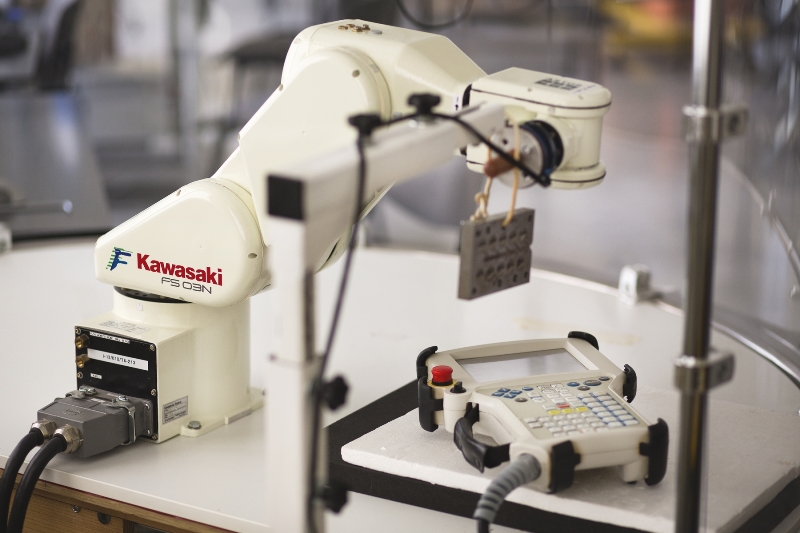
The robot was one of three at the plant, according to the plant's general affairs manager, and was feeding parts to a group of four automated gear-making machine tools when one of those tools broke down. Urada, who had worked at the plant for four years, went in to check the malfunction. UPI's first dispatch, sourced to an official of the Hyogo Labour Standards Bureau, said Urada got past a chain fence marked off limits rather than using the proper entrance, which would have automatically cut power to the robot as it opened. With the interlock never triggered, the arm was still live.
Accounts of the final seconds differ in detail but agree on the mechanism: the machine was set to manual, Urada made contact with the on-switch, and the arm swung, driving him into the adjacent gear machine. He could not be freed in time. The Labour Standards Bureau official told UPI that the workers who ran to help him did not know how to shut the robot down.
Five months of silence, then two wire stories
The accident happened in July; the outside world learned of it on 8 December 1981, when the Hyogo labour official disclosed it. UPI's follow-up two days later reported that the delay did not appear to be a cover-up, simply an accident that had not been widely reported. That second dispatch is where the institutional reaction appears, including a Japanese Labour Ministry official's view that the death turned on a procedural mistake:
'The accident need not have happened if he had gone through the proper entrance area,' said Katsuyuki Yamamoto, a senior specialist at the Industrial Safety division of the Japan Labor Ministry.
UPI, 10 December 1981
The Hyogo official quoted in the first dispatch was blunter about the regulatory gap around a machine class that had spread through Japanese industry faster than the rules governing it.
'There's been a tendency to put aside the regulations in the labor standards law with these new machines,' the official said. 'The unfamiliarity of the workers also contributed to the accident.'
UPI, 8 December 1981
The response: a taller fence and a national safety review
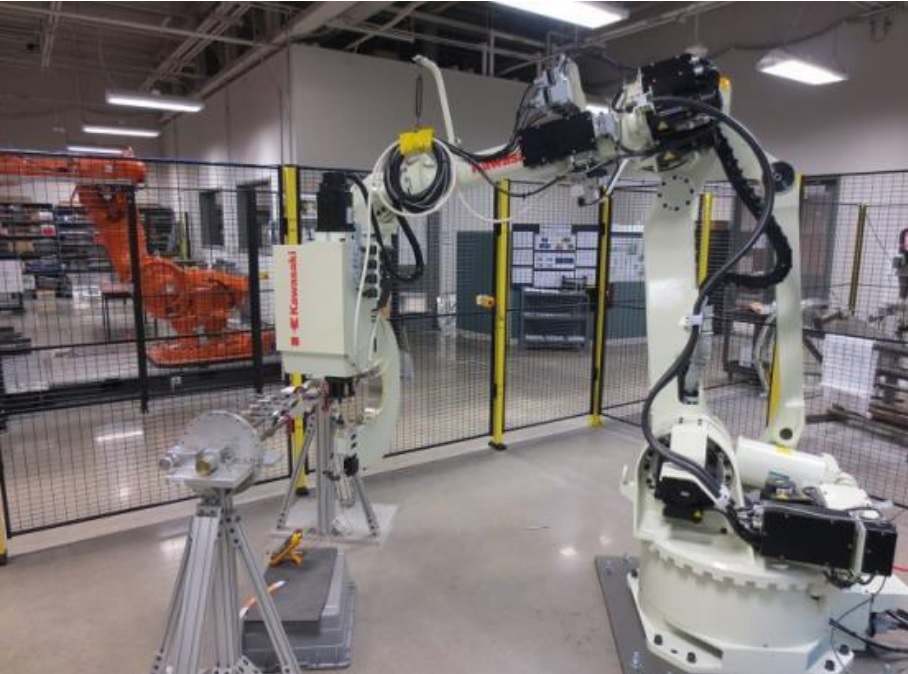
Kawasaki, then Japan's leading robot maker, enclosed the machine that killed Urada behind a six-foot fence wired to an automatic power shut-down, with the stated aim of making it physically impossible to enter the work envelope while the robot was energised. UPI reported the robot cost about $46,000 and that Kawasaki was building roughly 60 such machines a month under licence from an American firm. The Labour Ministry, meanwhile, commissioned a broader industrial safety plan spanning government ministries and manufacturers, with Yamamoto stressing that the new rules would cover automated machinery generally and would push makers to supply proper work manuals.
The context mattered: contemporary reporting put roughly 50,000 industrial robots in service in Japan, described as more than the rest of the world combined. The fatality landed in the middle of the fastest automation build-out on earth, at a company that both used and sold the machines.
Was this really the first?
The "first on record" framing carried by the 1981 wires does not survive scrutiny, and later writers have said so. American worker Robert Williams was killed at a Ford casting plant in Flat Rock, Michigan in January 1979 by an automated parts-retrieval machine, a case that produced a landmark product liability verdict against the equipment maker, as IFLScience notes. Confusing the picture further, the US National Institute for Occupational Safety and Health later treated a July 1984 Michigan die-casting death as the first documented robot-related fatality in the United States, while referring to two crush-injury cases already reported in Japan, in its March 1985 MMWR notice. Whether Williams counts depends on whether an automated storage-retrieval machine counts as a robot, which is exactly the definitional slipperiness that makes "first" claims about machine-caused deaths unreliable.
One more caveat is worth flagging as reported but unconfirmed. Some later retellings, including a criminal law text quoted in secondary coverage, describe the robot as having identified Urada as an obstruction to its task and calculated how to remove him. Nothing in the 1981 wire reporting supports that reading. The machine had no perception of him at all; that is the point.
Timeline
- 25 Jan 1979Robert Williams is killed by an automated parts-retrieval machine at a Ford casting plant in Flat Rock, Michigan, a case later cited as predating the Urada death in disputes over who was first killed by a robot.
- 4 Jul 1981Kenji Urada, 37, a maintenance worker at Kawasaki Heavy Industries' Akashi plant in Hyogo prefecture, enters the work area of a malfunctioning industrial robot without opening the interlocked gate, contacts the on-switch, and is crushed against a gear-processing machine by the robot's hydraulic arm.
- 8 Dec 1981An official of the Hyogo Labour Standards Bureau discloses the July death; UPI reports it as the first such incident on record and quotes the official on regulations being set aside for new automated machines.
- 10 Dec 1981UPI follow-up reports Kawasaki has enclosed the machine behind a six-foot fence with automatic power shut-down, and that the Japan Labour Ministry has commissioned a cross-ministry industrial safety plan covering automated machinery generally.
- 21 Jul 1984A 34-year-old die-casting operator in Michigan is pinned between the back of an industrial robot and a safety pole and dies, a case NIOSH treats as the first documented robot-related fatality in the United States.
- 22 Mar 1985CDC's MMWR publishes the NIOSH notice on the Michigan death, referring to two crush-injury robot cases already reported in Japan and urging design, training and clearance changes for robot work envelopes.
Why it moves the needle
Urada's death is the cleanest early demonstration of the failure mode that still kills people around automated machinery: a programmed system with no model of the human body executing its motion inside a space a human has entered. The guarding worked exactly as designed and was defeated in the most ordinary way possible, by a maintenance worker in a hurry taking a shortcut over a fence. The geographer Sam Kinsley, writing after a later robot fatality at a Volkswagen plant, argued against reading intent into such machines and toward reading the whole work system, noting that Urada had entered a prohibited area and brushed the on-switch after jumping the fence rather than opening the interlocked gate (samkinsley.com).
That systemic reading is the one the safety profession eventually adopted. Keep-out zones, interlocks, presence sensing and light curtains in modern robot cells exist because of a chain of deaths of which this is the most cited link, a history Hackaday recently traced from Williams and Urada to today's standards. For a record of machines that harm people, 1981 is where the ledger opens: not because a machine chose anything, but because deployment ran ahead of the rules, the training and the guarding, and a person died in the gap.