This is one of the clearest realized-harm cases in the driverless era: a machine that had just run over a human being decided, unprompted, to drive again - and could not perceive the person it was dragging. The pedestrian survived. The company that built the car effectively did not. What makes the case a needle-mover is not only the injury but the compounding failure that followed it: a perception system with no memory of the body beneath it, a post-crash policy that favored repositioning over standing still, and a disclosure posture that cost Cruise its permits, its CEO, and ultimately its place on public roads.
What happened on Fifth and Market
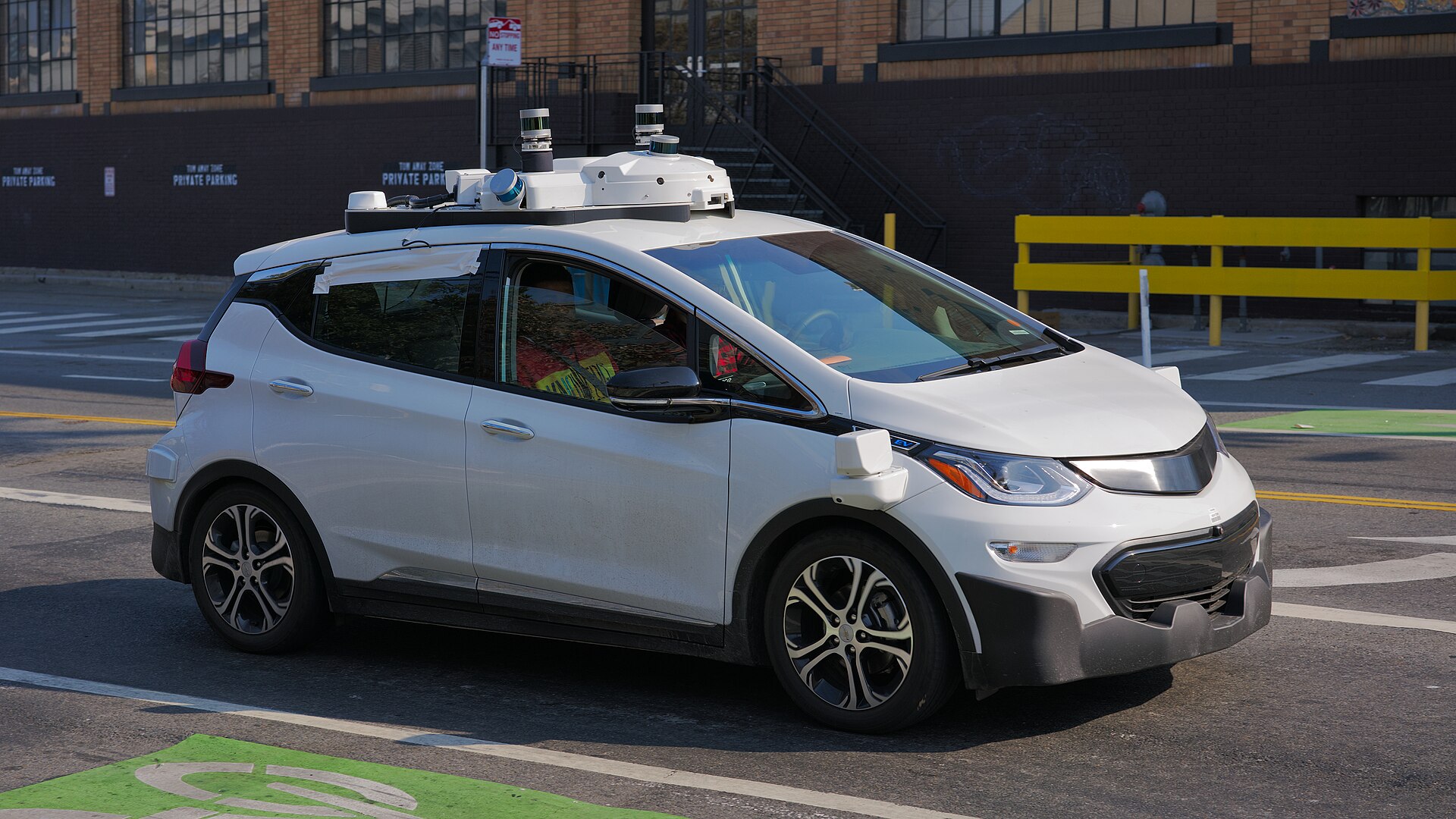
Shortly after 9:30 p.m. on 2 October 2023, a woman crossing a San Francisco street was hit by a human-driven Nissan whose driver fled. The impact threw her into the adjacent lane, directly in front of a Cruise autonomous Chevrolet Bolt that was operating with no safety driver. The robotaxi braked hard but ran her over and came to a halt.
The Justice Department's account of the crash, filed as part of Cruise's 2024 deferred prosecution agreement, is blunt about what happened next: the vehicle's detection system did not register that a pedestrian was underneath it, so the car attempted a pullover to the curb and dragged the woman more than 20 feet. The California DMV's suspension order, reviewed by TechCrunch, put the maneuver at roughly 20 feet and a peak speed of 7 mph. She ended up pinned under a rear tire and critically injured, according to the ABC7/AP report on the subsequent recall.
A later technical post-mortem by Carnegie Mellon's Philip Koopman catalogues the perception failures in sequence: the software could not anticipate that a pedestrian in the neighboring lane was about to be struck, lost track of her after the first impact, and then behaved as though it had not just driven over someone. His paper notes that her legs were partly within a camera's field of view during the drag and the system still did not register her presence (arXiv preprint).
The disclosure fight that followed
Regulators learned about the dragging in pieces. The DMV met Cruise representatives on 3 October and says the footage it was shown ended at the initial stop, with no verbal disclosure that the car had moved again; it says it heard about the second movement from another government agency and only obtained the fuller video on 13 October.
"The department only learned of the AV's subsequent movement via discussion with another government agency."
California DMV order of suspension, via TechCrunch
Cruise disputed the characterization at the time, telling TechCrunch it had shared the full video; the DMV said it stood by its finding. On 24 October the agency suspended Cruise's driverless deployment and testing permits, finding the vehicles unsafe for public operation and the company's representations misleading. Cruise then paused driverless operations everywhere, not just California.
The federal thread ran in parallel. NHTSA had opened an investigation in mid-October into Cruise vehicles behaving unsafely around pedestrians, citing multiple reports including the 2 October crash. Two years of enforcement followed: a $1.5 million civil penalty and consent order in September 2024 over incomplete crash reporting, and in November 2024 a criminal information and deferred prosecution agreement in which Cruise admitted submitting a false record to NHTSA and agreed to a $500,000 fine, a compliance program, and three years of oversight.
The recall: teaching the car to stay put
On 8 November 2023, five weeks after the crash, Cruise filed a voluntary recall covering its entire fleet of 950 robotaxis. The fix was software, not hardware. In its statement, the company framed the defect narrowly around post-collision behavior:
"The voluntary software recall addresses circumstances in which the Cruise Collision Detection Subsystem may cause the Cruise AV to attempt to pull over out of traffic instead of remaining stationary when a pullover is not the desired post-collision response."
Cruise statement, via ABC7/AP
Local officials were unimpressed. San Francisco Board of Supervisors president Aaron Peskin told ABC7 the company had forfeited public trust and that regulators had failed to get ahead of the technology. Koopman's analysis makes a related point from the engineering side: more conservative operating rules - such as requiring remote human confirmation before any movement following a collision with a pedestrian - would have prevented the dragging entirely, independent of any perception improvement.
What the internal review found
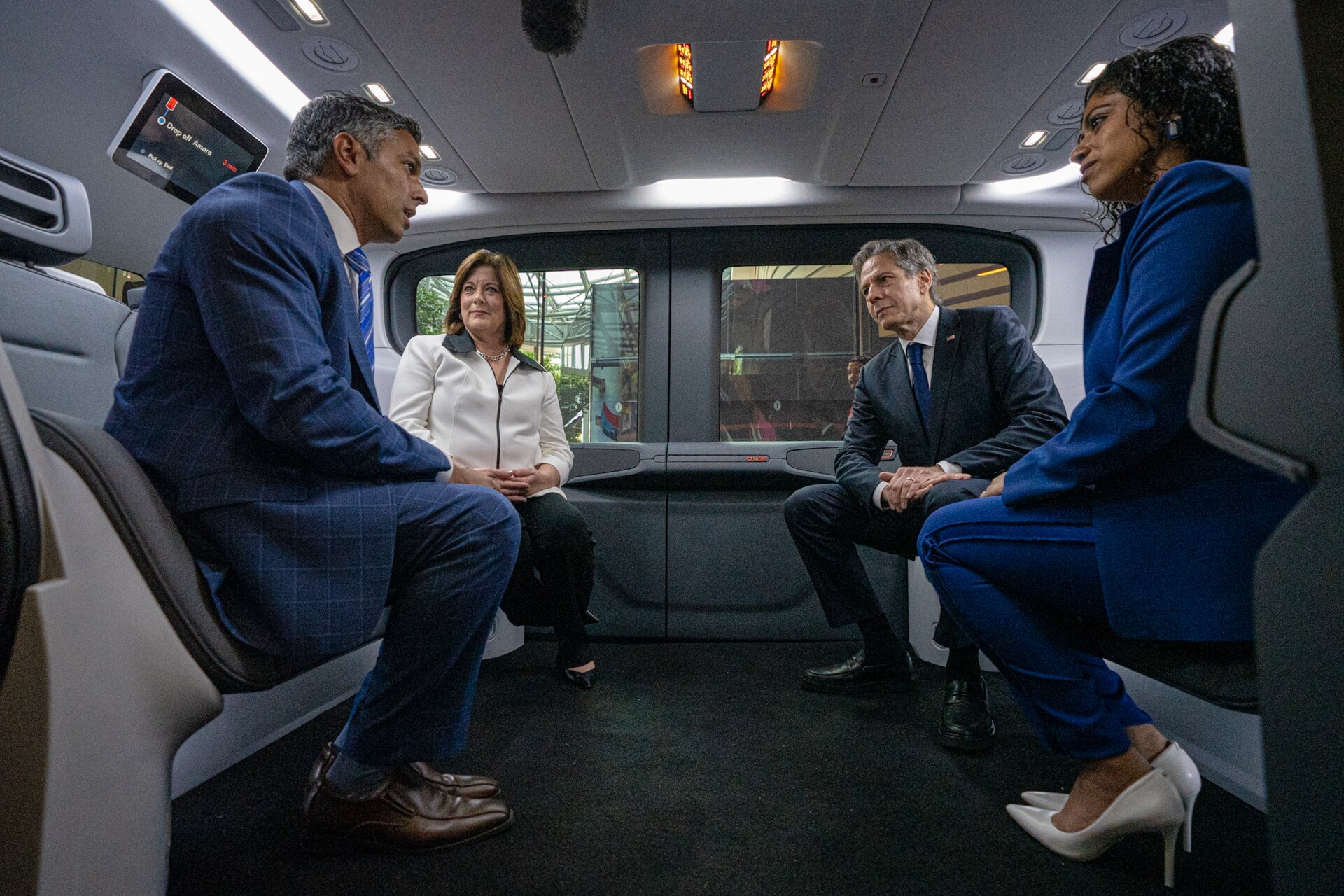
GM commissioned law firm Quinn Emanuel Urquhart & Sullivan to reconstruct the aftermath. Its 195-page report, released 24 January 2024 and covered by TechCrunch, concluded there was no deliberate scheme to deceive regulators. Instead it described leadership fixated on correcting the press narrative that Cruise, rather than the fleeing Nissan driver, had caused the crash - and an assumption that simply playing the video for officials, sometimes over glitchy connections, discharged the duty to disclose. The report characterized the resulting permit loss as a self-inflicted wound by senior staff who misjudged how a regulated company should deal with its regulators. It also revealed that the DOJ and SEC had opened investigations.
Notably, the review dwelt far more on the communications failure than on the driving software that produced the dragging in the first place - a framing choice worth remembering when the industry assesses its own accidents.
Where the sources diverge
The core facts are consistent across every source we fetched: date, mechanism, roughly 20 feet of dragging at about 7 mph, critical injuries, fleet-wide recall. Two discrepancies are worth flagging. CBS/AP's retrospective states that the California Public Utilities Commission suspended Cruise's driverless testing permit three weeks after the crash; the contemporaneous DMV order and TechCrunch's reporting make clear the 24 October suspension came from the Department of Motor Vehicles, with the CPUC's commercial permit rendered moot as a consequence. Second, the drag distance is given as "about 20 feet" by the DMV and press accounts and "over 20 feet" in the Justice Department's admitted statement of facts; we treat roughly 20 feet as the reported figure. Reporting on the exact date of the November 2024 criminal resolution varies, and we have relied on the Justice Department's own release rather than secondhand dates.
Timeline
- 10 Aug 2023The California Public Utilities Commission grants Cruise (and Waymo) the final permit needed to run paid, round-the-clock robotaxi service across San Francisco.
- 2 Oct 2023A hit-and-run driver strikes a pedestrian in San Francisco and propels her into the path of a driverless Cruise Chevrolet Bolt, which runs her over, stops, then executes a pullover maneuver that drags her roughly 20 feet at about 7 mph. She is pinned under a tire and critically injured.
- 3 Oct 2023Cruise briefs the California DMV and NHTSA. The DMV says the footage shown ended at the initial stop; the DOJ later states a video shown to NHTSA failed to play the dragging segment due to technical problems, and Cruise's one-day report omitted the secondary movement.
- 13 Oct 2023The DMV receives the video showing the additional movement, after learning of it from another agency.
- 16-17 Oct 2023NHTSA opens an investigation into Cruise vehicles operating unsafely around pedestrians, citing several reports including the 2 October crash.
- 24 Oct 2023The California DMV immediately suspends Cruise's driverless deployment and testing permits, citing unreasonable public risk and misrepresentation.
- 26 Oct 2023Cruise pauses all driverless robotaxi operations nationwide.
- 8 Nov 2023Cruise files a voluntary recall covering all 950 robotaxis, updating software so vehicles remain stationary rather than attempting a pullover in comparable post-collision circumstances.
- Late Nov 2023 (inferred)Co-founder and CEO Kyle Vogt resigns and Cruise lays off nearly a quarter of its staff. Inferred timing: TechCrunch reports both events as having occurred in the wake of the crash and before its January 2024 article, without giving exact dates.
- 24-25 Jan 2024GM-commissioned Quinn Emanuel report is released, finding no intentional deception but severe misjudgment by leadership; Cruise discloses DOJ and SEC investigations.
- 30 Sep 2024NHTSA announces a $1.5 million civil penalty and consent order over Cruise's incomplete crash reporting, with a two-year base term and required corrective action plan.
- Nov 2024 (inferred)Cruise admits providing a false record to NHTSA and enters a deferred prosecution agreement with a $500,000 criminal fine and three years of compliance obligations. Date given as a month because the DOJ release carries an update stamp of 15 November 2024 rather than an explicit publication date.
Why it moves the needle
Three things elevate this above an ordinary traffic crash. First, the harmful act was the machine's own: no operator commanded the pullover, and the system's inability to model a human it had just struck is a perception-and-memory failure, not a driver error. Second, the designed behavior itself was wrong for the situation - a policy of clearing traffic after a collision is reasonable until the obstacle is a person under the car, which is precisely the edge case an autonomy stack must handle. Third, the institutional response showed how thin the regulatory visibility into driverless fleets actually was: the state's own regulator did not learn of the dragging from the operator, and it took federal enforcement, a $1.5 million civil consent order and then a criminal charge, to establish first that the crash report was incomplete and then that Cruise had submitted a false record.
The consequences cascaded well past the recall. Cruise lost its California permits, grounded its fleet nationwide, laid off roughly a quarter of its workforce, and saw co-founder Kyle Vogt resign - the closest thing yet to a corporate death sentence handed down over a single autonomous-vehicle incident, and a permanent reference point for how quickly a deployed AI system's blind spot can become an existential one.