On 28 November 1979 a McDonnell Douglas DC-10 on an Antarctic sightseeing charter flew into the lower slopes of Mount Erebus, killing all 257 people aboard. The aircraft was not lost or off course in any way its own equipment could detect: it was following, with great precision, an automatic navigation track built from coordinates that Air New Zealand's ground staff had corrected in the small hours of that morning, shifting the route roughly 27 nautical miles east of the path the crew had been briefed to expect. No one told the flight deck. The crash is one of the earliest large-scale demonstrations of a failure mode that now recurs across automated and autonomous systems: the machine executed its instructions faithfully, the humans trusted it, and the instructions had quietly changed underneath them.

A corrected coordinate nobody mentioned
Captain Jim Collins and First Officer Greg Cassin attended a route qualification briefing on 9 November 1979, nearly three weeks before the flight. The material they were shown, including a printout of a previous trip's flight plan, left them with the understanding that the instrument route ran south down McMurdo Sound, over flat sea ice and well west of Ross Island, with a minimum en route altitude of 16,000 feet and a visual let-down permitting descent to 6,000 feet in good conditions, according to NZ History's account of the flight.
In the early hours of 28 November, the airline's navigation section altered the coordinates of the route's southernmost waypoint. Staff believed they were making a minor housekeeping fix to a long-standing destination point; in fact a typing error made some 14 months earlier had left that point 27 nautical miles away from where the navigation section thought it was, so the "correction" moved the computed track off the sea ice and onto the flank of a 3,794-metre active volcano. The amended flight plan was handed to the crew at the pre-departure briefing, and they loaded the new figures into the aircraft's navigation computer without being told anything had changed.

Four minutes from the last radio call
Flight TE901 left Auckland shortly before 8.30 a.m. and reached the McMurdo area around midday, in radio contact with the United States Navy air traffic control centre at McMurdo Station. At 12.45 p.m. NZST, Cassin reported the DC-10 at 6,000 feet and descending to 2,000 feet in visual conditions. That was the last transmission. Four minutes and 42 seconds later the aircraft struck Mount Erebus.
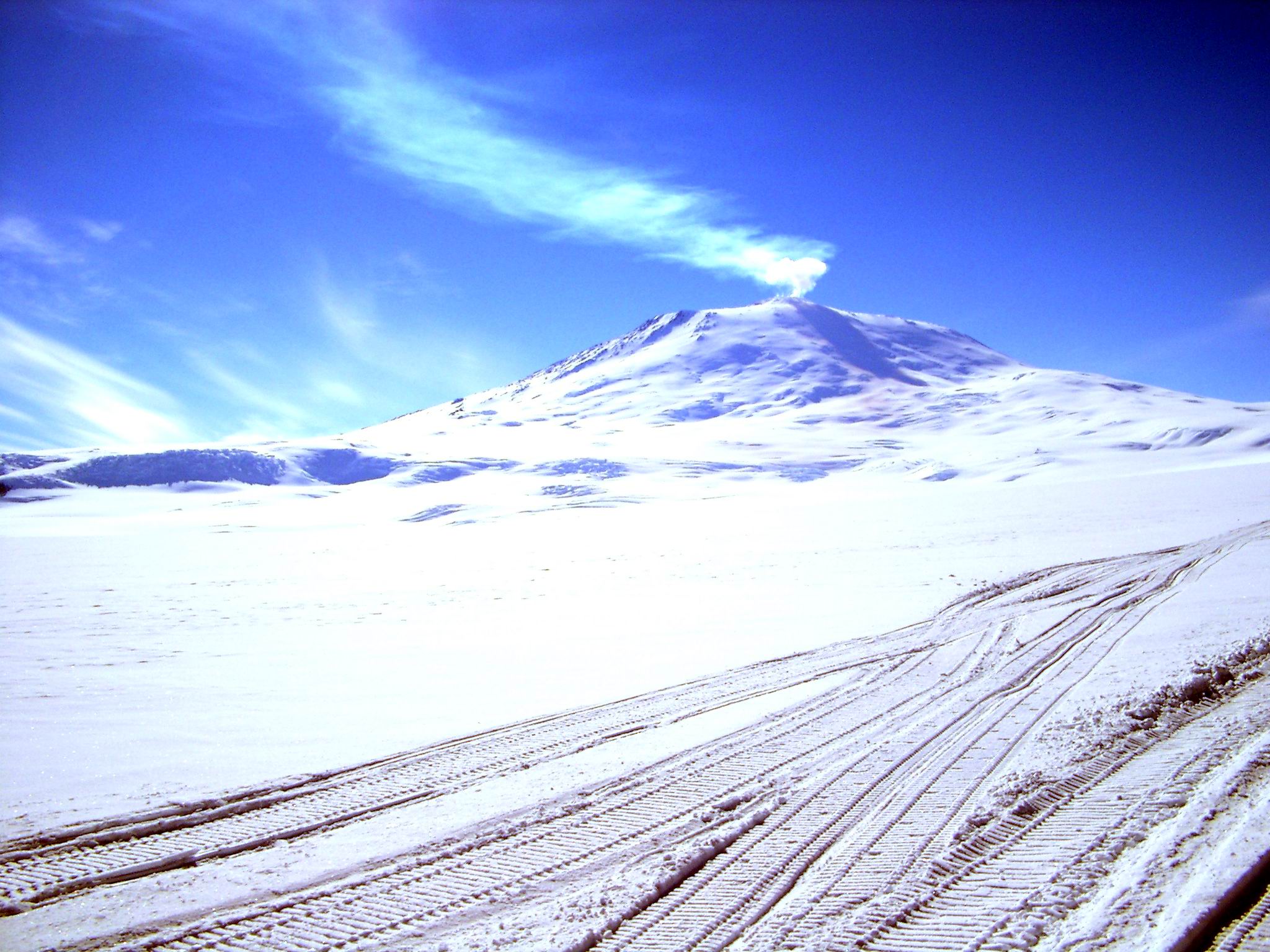
What the crew could not see was the mountain itself. The Royal Commission that later examined the crash devoted a long section to the polar optical phenomenon known as whiteout, and, as summarised in the Privy Council's 1983 judgment, found that the phenomenon was unknown to the airline's management, to the Civil Aviation Division, and to its pilots and navigators, so Collins and Cassin had never been briefed that it existed. In conditions like those prevailing at the crash site, its effect on a pilot unaware of it is to create the impression of unlimited visibility over flat terrain, concealing even a precipitous mountainside directly ahead. The crew therefore had a clear-looking windscreen, a computer flying an approved track, and no reason to doubt either.
Search aircraft sighted wreckage on the lower slopes that night, and confirmation that no one had survived followed the next day. It remains the worst civil disaster in New Zealand's history, as the Ministry for Culture and Heritage records.
Two inquiries, two causes
The first investigation, by Chief Inspector of Air Accidents Ron Chippindale, concluded that the probable cause was the captain's decision to continue at low level toward an area of poor surface and horizon definition when the crew were not certain of their position, "and the subsequent inability to detect the rising terrain which intercepted the aircraft's flight path". Chippindale never officially used the phrase "pilot error", but that was the inference many drew, and the Privy Council later summarised his report as ascribing "the principal blame for the tragedy to pilot error", and his report also criticised omissions and inaccuracies in the route briefing and faulted both the airline and the Civil Aviation Division, per NZ History's summary of the inquiries.
A Royal Commission of Inquiry under High Court judge Peter Mahon, announced in April 1980, reached the opposite conclusion after 75 sitting days and 52 witnesses. Mahon identified the dominant and effective cause as the act of the airline in changing the aircraft's computer track without telling the aircrew, attributing the underlying fault less to the individuals who made the change than to what he called "the incompetent administrative airline procedures which made the mistake possible". He found that neither the captain, nor the first officer, nor the flight engineers made any error contributing to the disaster. He also found that airline officials had given false evidence as part of what he called a predetermined plan of deception, and said he had been forced to listen to "an orchestrated litany of lies". His report was delivered on 16 April 1981 and released publicly on 27 April.
What the courts left standing
Air New Zealand challenged the deception finding and the associated order that it pay $150,000 toward the cost of the inquiry. The Court of Appeal held on 22 December 1981 that Mahon had breached natural justice by not giving those accused an opportunity to answer, and quashed the costs order; Mahon resigned from the bench and appealed to the Privy Council, which in October 1983 agreed that the conspiracy conclusion was one he was not entitled to reach on the material before him. Crucially, the Board recorded that his findings on the cause of the crash were never challenged at all, and described the report as clearing the two pilots. Lord Diplock's opening description of the accident is stark:
flew at a height of 1,500 feet straight into the lower snow-clad slopes of a 12,500 feet high volcano, Mount Erebus, causing the instantaneous death of all the 237 passengers and 20 members of the crew who were aboard
Mahon v. Air New Zealand, Judicial Committee of the Privy Council
The judgment is equally plain about the role of the automation. Describing how Antarctic flight plans worked, the Board noted that the waypoint list, once loaded,
enabled the aircraft to be navigated automatically and with great accuracy on a pre-determined course
Mahon v. Air New Zealand, Judicial Committee of the Privy Council
Accuracy was the problem. The system did exactly what its data told it to do, and the data no longer matched the route in the pilots' heads.
Why it moves the needle
Erebus is a foundational case in the study of how people fail alongside automated systems, and the mechanism is uncomfortably modern. A route database held on the ground was edited by staff who did not understand the true state of the record they were editing; the edit propagated into an onboard system that flew it without comment; there was no procedure requiring the change to be surfaced to the people whose lives depended on it; and the one sensory cross-check the crew might have used was defeated by an environmental effect nobody had warned them about. Every element of that chain has an analogue in today's autonomous vehicles, map-and-waypoint-driven drones and machine-learning pipelines fed by silently updated datasets.
It also set a precedent in how such accidents are reasoned about. Mahon's insistence that the causal weight lay in the organisational system around the machine, rather than in the last human hand on the controls, is now standard practice in accident investigation, and it was reached over the objections of a state-owned airline that later successfully challenged his separate finding of an orchestrated cover-up.
Timeline
- 9 Nov 1979Captain Jim Collins and First Officer Greg Cassin attend a route qualification briefing that leaves them expecting a track down McMurdo Sound, west of Mount Erebus.
- 28 Nov 1979 (early hours)Air New Zealand's navigation section alters the coordinates of the route's southernmost waypoint, believing it a minor fix; because of a typing error made about 14 months earlier, the change shifts the computed track roughly 27 nautical miles east, directly over Mount Erebus. The crew are not informed.
- 28 Nov 1979Flight TE901 departs Auckland shortly before 8.30 a.m. with the amended flight plan loaded into the aircraft's navigation computer.
- 28 Nov 1979At 12.45 p.m. NZST the first officer reports the DC-10 at 6,000 feet descending to 2,000 feet in visual conditions; this is the final transmission.
- 28 Nov 1979At 12.49 p.m. NZST the aircraft strikes the lower slopes of Mount Erebus at about 1,500 feet, killing all 237 passengers and 20 crew.
- 29 Nov 1979After wreckage is sighted overnight, confirmation follows that there are no survivors.
- 21 Apr 1980Justice Peter Mahon is named to conduct a Royal Commission of Inquiry into the disaster (NZ History's date; the Privy Council judgment places the Governor-General's formal appointment on 11 June 1980).
- Jun 1980Chief Inspector of Air Accidents Ron Chippindale's report is published, attributing probable cause to the captain's decision to continue at low level in poor visual definition. NZ History gives the release as midnight on 19 June; the Privy Council judgment gives 12 June, the day after the Royal Commission's formal appointment.
- 16 Apr 1981Mahon delivers his report, finding the dominant cause was the airline changing the aircraft's computer track without telling the crew, exonerating the flight crew, and alleging an orchestrated litany of lies by airline officials. It is released publicly on 27 April.
- 22 Dec 1981The Court of Appeal finds Mahon breached natural justice in his deception finding and quashes the $150,000 costs order against the airline; he later resigns from the bench.
- 20 Oct 1983The Privy Council 'very reluctantly' dismisses Mahon's appeal, upholding the Court of Appeal's quashing of the costs order because the conspiracy finding was one he was not entitled to reach, while recording that his findings on the cause of the crash were never challenged and that his report 'convincingly clears' the pilots.
- 28 Nov 2019On the 40th anniversary, Prime Minister Jacinda Ardern and Air New Zealand's board chair issue the first full apologies to the families.
An apology 40 years later
Blame followed the pilots for decades. On the 40th anniversary, 28 November 2019, Prime Minister Jacinda Ardern apologised on behalf of the government for the actions of an airline that had then been in full state ownership and for parliament's handling of Mahon's report, and Air New Zealand board chair Dame Therese Walsh apologised for the airline's failure in its duty of care and for the treatment of bereaved families, as RNZ and 1News both reported. Neither the government nor the airline had offered a full apology in the preceding four decades.